
The Lowdown on Saltwater Pools vs Chlorine Pools: What Southern California Homeowners Should Know
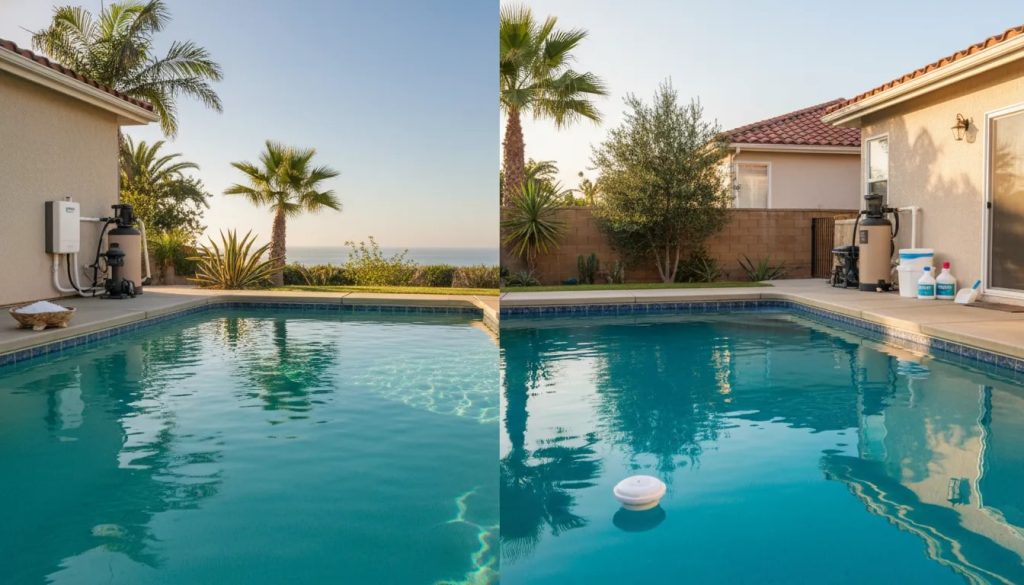
Why the choice matters
A backyard pool is both an investment and a lifestyle decision. When weighing saltwater against traditional chlorine systems, the choice often comes down to cost, maintenance habits, and site-specific factors like coastal exposure and electrical access. Both systems rely on chlorine to sanitize water, but they produce and deliver that chlorine in different ways—and that difference shapes upfront costs, ongoing expenses, and maintenance routines.
How both systems actually work
Traditional chlorine pools add chlorine directly to the water in liquid, granular, or tablet form. Saltwater systems add salt to the pool and use a salt chlorine generator to convert that salt into chlorine via electrolysis. In both cases, the active sanitizer is chlorine; the distinction is whether chlorine is introduced as a chemical product or generated on site from salt.
Saltwater pools: pros and cons
Salt chlorine systems are popular for good reasons, but they are not maintenance-free miracles. Homeowners should consider both benefits and trade-offs before committing.
- Pros
- Lower annual chemical cost. Salt is generally cheaper than buying liquid or solid chlorine each season, so ongoing sanitizer expenses are often lower.
- Softer swim feel. Many report that salt-treated water feels silkier and more pleasant on skin and eyes.
- Adjustable chlorine production. Salt chlorine generators allow simple ramping up or down of output to match bather load and weather conditions.
- Cons
- Higher upfront system cost. Installing a salt chlorine generator adds equipment expense and, in many cases, additional electrical work at the time of installation.
- Equipment lifespan. Salt generators typically need replacement on a 3 to 7 year cycle, which is a recurring capital expense not present with simple erosion feeders.
- Set-it-and-forget-it risk. Extremely clear water from salt systems can lull homeowners into skipping regular chemistry checks. That can cause “chlorine creep,” where chlorine levels drift high and begin to damage pool surfaces.
Traditional chlorine pools: pros and cons
Traditional systems remain the industry standard for many installations. For some homeowners they are the most practical choice.
- Pros
- Lower initial cost. Feeders and storage for chlorine products are usually far less expensive up front than a salt chlorine generator and associated wiring.
- No additional electricity required for generation. Because chlorine is added directly, there is no need for dedicated power to run a generator.
- Decades of industry familiarity. Replacement parts are widely available and service technicians are plentiful, which simplifies repairs and upgrades.
- Cons
- Handling hazardous chemicals. Liquid and solid chlorine are harsh substances that require careful storage and strict adherence to label safety instructions.
- Ongoing chemical cost. Buying chlorine regularly can be more expensive than buying salt for a generator system.
- No built-in monitoring advantage. Traditional systems do not reduce the need for frequent chemistry checks; homeowners must actively manage sanitizer and water balance regardless of system type.
Maintenance reality: monitoring chemistry and protecting finishes
Regardless of system choice, regular testing and water-balance management are essential. Chemistry should be checked at minimum once a week and, depending on usage, ideally more frequently. The Langelier saturation index, or LSI, is a powerful tool for protecting plaster, tile, and other finishes. Using LSI together with routine tests helps prevent etching from corrosive water or scale from over-saturated water.
Salt systems can create a false sense of security because water often looks pristine even when imbalanced. That makes regular tests and attention to LSI even more important for salt-fed pools.
Southern California considerations
Coastal climates, HOA rules, and local permitting all influence which system fits best. Near the ocean, materials exposed to salt air may require different finish choices and corrosion-resistant equipment. A salt system does not necessarily increase exterior corrosion, but it does place salt in the circulation system; careful equipment selection and protective measures are prudent for coastal installs.
Homeowners in Orange County and surrounding areas should weigh electrical access and permit timelines. Salt generators require power and sometimes additional conduit or outlets during installation, which affects project scheduling and cost estimates.
For homeowners planning a custom pool build, working with a local contractor who understands coastal soil conditions, permit requirements, and material selection leads to smoother projects. More information about custom pool construction can be found at https://werthbuilders.com and specific details on pool services are available at https://werthbuilders.com/services/pools/.
Practical checklist for deciding
- Estimate initial equipment cost versus annual chemical costs to calculate multi-year ownership expense.
- Confirm electrical capacity and any additional wiring needed for a salt chlorine generator.
- Decide how disciplined the homeowner will be about chemistry checks; frequent monitoring favors either system, but salt systems can hide imbalances.
- For coastal homes, specify corrosion-resistant equipment and finishes during the design phase.
- Factor generator replacement every 3 to 7 years into long-term budgeting for salt systems.
FAQ
Is a saltwater pool chlorine-free?
No. Saltwater pools produce chlorine from salt using a generator. The active sanitizer in both saltwater and traditional systems is chlorine; the difference is whether the chlorine is added directly or generated on site.
Are salt chlorine generators expensive to replace?
Yes. Salt chlorine generators have a limited lifespan and often require replacement every 3 to 7 years. That replacement cost should be included in a multi-year ownership budget.
How often should pool chemistry be tested?
At minimum, chemistry should be checked once a week. Many homeowners benefit from daily checks during heavy use, heat waves, or after storms. Regular LSI calculations help protect pool finishes over time.
Will saltwater damage pool surfaces or equipment?
Properly maintained salt systems do not inherently damage pool finishes. Problems usually stem from poor water balance or neglect, not the presence of salt itself. Using corrosion-resistant fixtures and following maintenance schedules mitigates risk.
Which system is best for a Southern California coastal home?
There is no universal answer. Salt systems reduce recurring chemical costs and create a pleasant swim feel, but they add upfront cost and require periodic generator replacement. Traditional systems are cheaper up front and simpler to install where electrical work is limited. A site’s electrical access, exposure to coastal conditions, and the homeowner’s maintenance discipline will guide the best choice.
Final perspective
Both saltwater and traditional chlorine systems sanitize pools effectively when managed properly. The real distinction for homeowners is the trade-off between upfront equipment cost, recurring chemical cost, maintenance habits, and local installation factors. Investing time in planning, choosing the right equipment, and committing to a regular chemistry routine ensures the pool remains healthy and the finish stays protected for years.
Homeowners considering a larger backyard transformation that pairs a pool with an outdoor kitchen or pavilion should evaluate how system choice integrates with overall design and materials. Additional resources on outdoor kitchens and integrated outdoor living projects are available at https://werthbuilders.com/outdoor-kitchens/.
Ready to Transform Your Backyard?
Get a free consultation and estimate for your custom pool, spa, or outdoor living project. Serving Huntington Beach & Orange County.