
How To Backwash a Pool Filter the Right Way
Why backwashing matters for a healthy pool
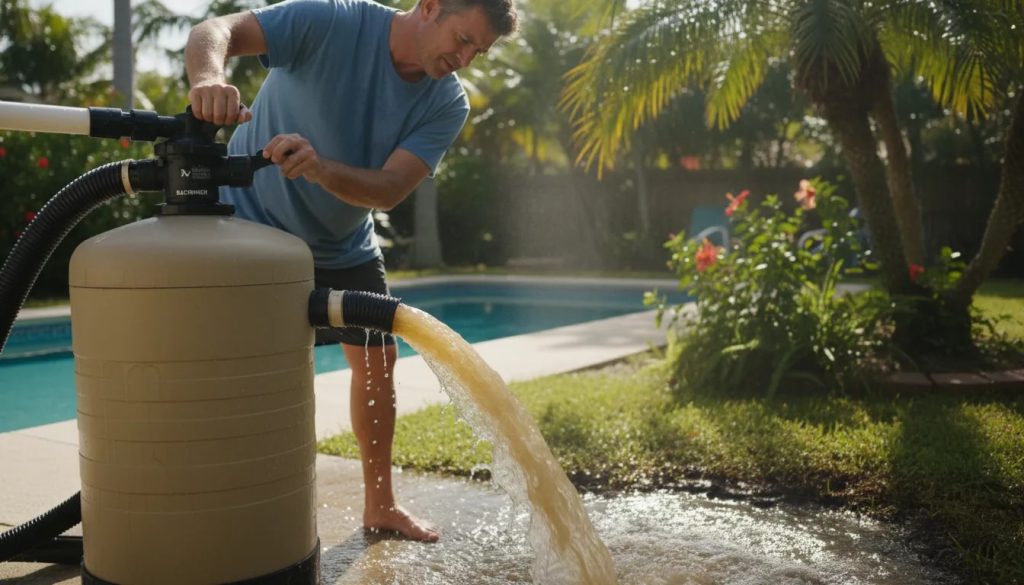
Filtration is the workhorse of any pool system. As water circulates, it deposits dirt, oils, hair, and fine particles inside the filter medium. Over time that medium—sand or D.E. powder—becomes clogged, flow slows, and the system’s pressure rises. Backwashing forces water in the reverse direction through the filter and ejects trapped debris through the waste port, restoring flow and extending equipment life.
When to backwash
Homeowners should backwash when the filter pressure climbs about 10 psi above normal operating pressure or when return jets show poor flow. Record the gauge reading after installing or right after a backwash; that becomes the baseline. If the gauge later reads 10 psi or more above that baseline, the filter needs cleaning.
In drought-prone regions and municipalities with discharge restrictions, minimize unnecessary backwashes and check local rules before sending waste water down drains or streets.
Backwashing a sand filter with a multiport valve
Backwashing a sand filter is straightforward. The key safety rule is never to turn the multiport valve while the pump is running; rotating the valve under pressure can dislodge or damage the internal diverter gasket.
- Turn the pump and filtration equipment off.
- Remove the skimmer basket, especially if it is full of debris.
- Attach a backwash hose to the filter’s waste or backwash port.
- Set the multiport valve to Backwash, then restart the pump. Water should flow out the waste hose.
- Run until the discharged water runs clear—typically 30 seconds to 1 minute. Check the hose end or the filter sight glass if equipped.
- Turn the pump off and set the valve to Rinse. Restart and run about 30 seconds to settle the media.
- Turn the pump off again, return the valve to Filter, and restart normal operation.
For small filters, such as Intex sand systems, perform backwashing in short cycles: one minute backwash, one minute rinse, repeat three times to avoid blowing debris back into the pool.
Backwashing a D.E. (diatomaceous earth) filter
D.E. filters capture very fine particles but require careful handling because powder coats the grids and forms the filtering cake. For most D.E. filters only some D.E. is lost during backwashing, so a partial recharge is necessary.
- Turn the filtration system off and connect a backwash hose to the waste port.
- If using a multiport valve, set it to Backwash. For a push-pull valve, open the backwash gate by turning and pulling up the handle.
- Restart the pump and run for 1–2 minutes. Water should discharge through the hose.
- Turn the pump off and set the valve to Rinse. Restart and run roughly one minute.
- Turn the pump off and return the valve to Filter (multiport) or re-lock the push-pull handle.
- Restart the pump and ensure it is primed before adding replacement D.E.
How to recharge D.E. powder
Measure D.E. by weight. Backwashing does not remove all existing powder, so plan to add around 80 percent of the amount used for a fresh grid coating. Most standard D.E. filters need roughly 3–4 pounds replaced after backwashing. Use a one-pound plastic scooper for easy measuring.
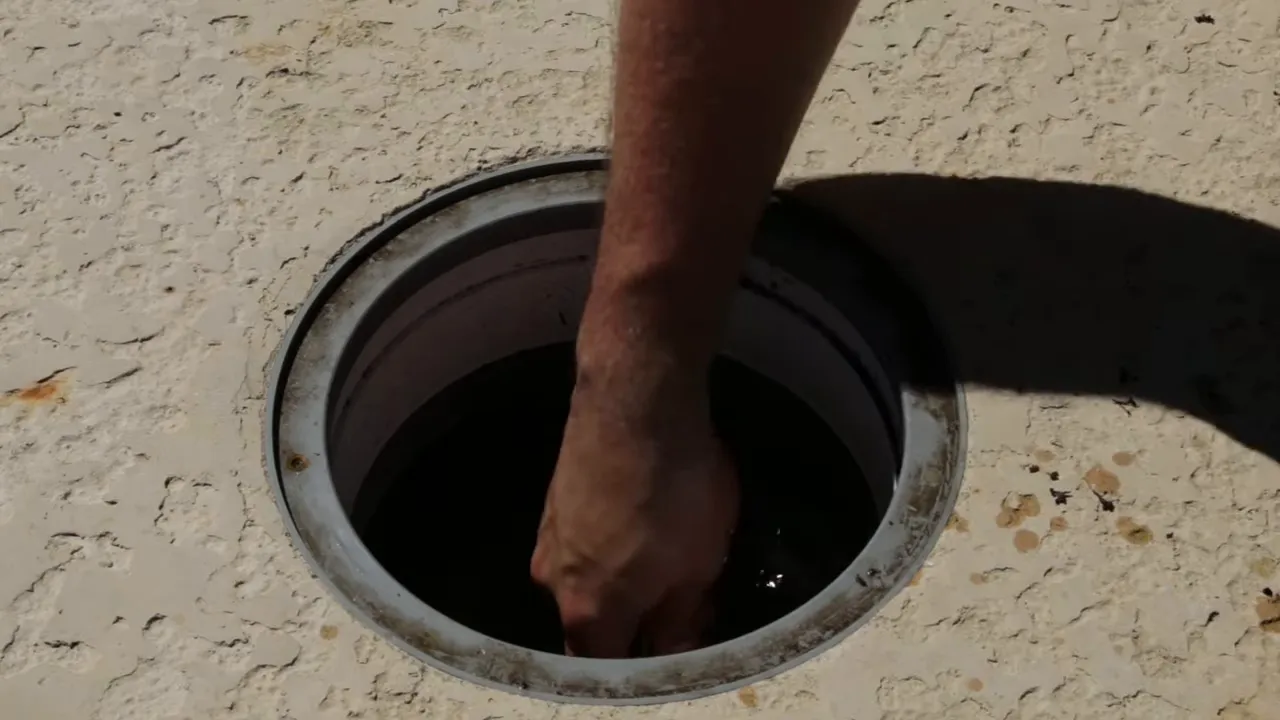
- Make sure the pump is running and fully primed. If not, turn the pump off, remove the pump lid, and fill the pump basket with water before restarting.
- Remove the skimmer lid and basket, then add D.E. one scoop at a time directly into the skimmer while the pump runs. The powder should draw immediately into the filter.
- Run the pump for at least 30 minutes so the D.E. distributes evenly across the filter grids.
Maintenance schedule and troubleshooting
Regular maintenance keeps a pool system efficient and reduces long-term costs. A practical schedule includes:
- Monitor the pressure gauge weekly and backwash when pressure is 10 psi over baseline.
- Replace sand or D.E. grids every 4–5 years or sooner if backwashing no longer restores normal pressure and flow.
- Check valve gaskets and O-rings during each service; never switch multiport or push-pull valves while the pump is running.
- Watch return flow and skimmer performance; reduced circulation can signal pump, plumbing, or filter problems.
If repeated backwashing does not restore flow or pressure, the filter medium or grids may be worn and should be replaced. Prolonged high pressure stresses the pump and can shorten equipment life.
Practical considerations for Southern California homeowners
Homeowners in Orange County and the wider Southern California region should balance proper filtration maintenance with local water conservation and municipal discharge rules. Many agencies restrict where pool backwash water may go. Capture and dispose of backwash water in accordance with local codes or consider using a backwash recycling kit that returns water to the pool or reuses it for irrigation where permitted.
Proper filtration also protects the investment in an inground concrete pool or gunite pool. Well-maintained equipment reduces run-time, lowers electrical costs, and helps maintain consistent water quality throughout the long Southern California swim season. For those planning or renovating a concrete pool, consider how equipment placement, automation, and filtration capacity will affect maintenance routines; resources at werthbuilders.com outline design and construction approaches that simplify seasonal upkeep.
How often should a homeowner backwash their filter?
How much D.E. powder should be added after backwashing?
Can backwashing damage the filter or pump?
When should filter media or grids be replaced?
Are there special local rules about disposing of backwash water?
Further resources
Homeowners planning a new inground concrete pool, upgrading equipment, or rethinking equipment placement should consider the long-term benefits of professional design and proper filtration sizing. Information about custom pool construction and system design is available at https://werthbuilders.com/services/pools/ and the company homepage https://werthbuilders.com provides additional project examples and planning resources.
Final notes
Backwashing is a simple but essential task that protects pool equipment and keeps water clear. Following the correct sequence for sand and D.E. filters, replacing media on schedule, and respecting local discharge regulations will keep pools running efficiently. Regular attention to the pressure gauge and valve-handling best practices prevents unnecessary wear and keeps swim seasons worry-free.
Ready to Transform Your Backyard?
Get a free consultation and estimate for your custom pool, spa, or outdoor living project. Serving Huntington Beach & Orange County.