
Best Pool Shape for Your Yard: Rectangle, Freeform, Kidney, or Custom — A Southern California Guide
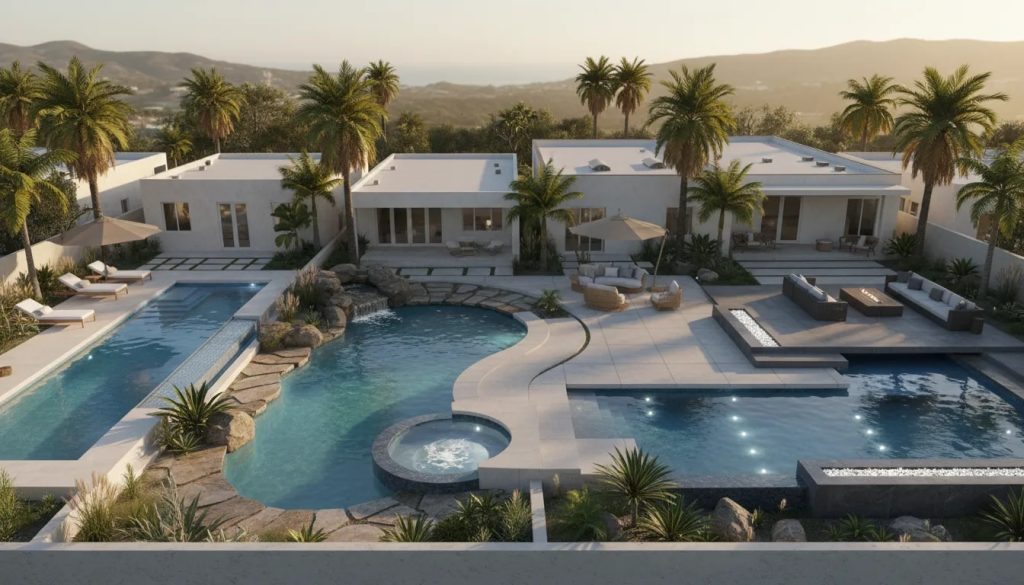
A pool shape determines how a backyard looks, how it will be used, and how it performs over decades. Homeowners in Southern California planning an inground concrete pool should match shape to yard size, lifestyle, and local site conditions. This guide explains the pros and cons of common shapes, how to choose one for a specific property, permit and site considerations unique to the region, and a practical checklist to move from idea to build.
Why pool shape matters
Shape influences functionality, circulation, safety, landscaping integration, and long-term maintenance. The right shape makes the pool easy to use for laps, family play, entertaining, or creating a resort-style focal point. For lasting value and design flexibility, many Southern California builders recommend concrete or gunite construction because it allows any shape, depth, and integrated feature without the limits of preformed shells or liners.
How to choose: align shape with use and site
Start by answering three questions: What will the pool be used for? How much usable yard area is available? What style does the property call for? Use the guidance below to translate answers into a recommended shape.
Rectangle pools — best for exercise and clean modern lines
Best for: lap swimming, structured entertaining, modern and minimalist landscapes.
Pros
- Efficient swim lanes and lap-ready layouts.
- Simple to terrace and align with decks, patios, and outdoor kitchens.
- Straightforward pool equipment sizing and hydraulic design.
Cons
- Less natural or organic appearance in rustic landscapes.
- Can dominate small yards unless softened with plantings and ledges.
Typical dimensions: Common residential sizes include 12 x 24, 15 x 30, and 20 x 40 feet. For lap swimming, consider 40 feet or longer when space allows.
Freeform pools — best for natural, resort-style backyards
Best for: homeowners seeking an organic look, curved lines, and integrated landscaping.
Pros
- Blends with rockwork, waterfalls, and mature plantings.
- Flexible for irregular lot shapes and sloped yards.
- Creates separate shallow and deeper zones without strict geometry.
Cons
- Less ideal for laps; swim distance is limited by curves.
- Custom plumbing routing can add cost to concrete builds.
Kidney-shaped pools — good compromise for separation and flow
Best for: medium yards that need a visual divide between play and relaxation areas.
Pros
- Natural curve that creates a sheltered shallow area for loungers.
- Works well when a utility area or spa needs to be tucked out of sight.
Cons
- May not maximize swim length or efficient use of narrow lots.
Custom concrete pools — unlimited design freedom
Best for: complicated lots, resort features, or when the pool is the centerpiece of a complete backyard renovation.
Concrete pools built with gunite or shotcrete allow curves, negative edges, vanishing edges, custom benches, swim-up bars, tanning ledges, and integrated spas. For Southern California projects, concrete provides longevity and the ability to match coastal or desert design palettes.
Match shapes to common yard scenarios
Below are typical homeowner goals with recommended shapes and features.
- Small or narrow urban lots — A compact rectangle or narrow lap pool with a tanning ledge and integrated spa maximizes utility.
- Sloped yards — Freeform or custom pools that step with the slope, often combined with retaining walls and tiered patios.
- Entertaining and outdoor kitchens — Rectangular or L-shaped pools that align with a covered patio and outdoor kitchen for sight lines and circulation. See outdoor kitchen examples at Outdoor Kitchens Southern California.
- Coastal or resort-style homes — Custom concrete pools with vanishing edges and textured finishes that resist salt air and blend with landscape themes.
Site, permit, and construction considerations in Southern California
Local rules, soil conditions, and HOA guidelines strongly influence what shape and size are feasible.
- Setbacks and green space — Many jurisdictions require minimum offsets from property lines and a percentage of permeable green area. Confirm setback rules early in design.
- Soil and coastal conditions — Sandy coastal soils or high water tables require specialized foundation and drainage design. Soil reports and geotechnical input are often necessary.
- Permit timelines — Permit review can take several weeks to months depending on complexity. Allow the permit phase to be part of the project schedule.
- Contractor licensing — Verify contractor licensing with the Contractors State License Board when hiring for a custom pool build in California.
- Utilities and easements — Check utility locations and easements that restrict excavation or placement of pool equipment.
Design checklist before committing to a shape
Homeowners should collect basic site information and make decisions on function and features.
- Measure usable yard area and note access paths for excavation equipment.
- Decide primary use: laps, family play, entertaining, or relaxation.
- List must-have features: spa, tanning ledge, shallow entry, bench seating, integrated lighting, or waterfalls.
- Confirm setbacks, HOA rules, and any coastal or municipal requirements.
- Plan for pool equipment location with noise and screening in mind.
- Choose finish palettes that match the home and climate — pebble, quartz, or tile are common on concrete pools.
Typical build timeline (high level)
Timelines vary by site and permitting, but a representative sequence for a concrete pool is:
- Planning and design — 2 to 6 weeks to develop schematic plans and preliminary pricing.
- Permits and approvals — 4 to 12+ weeks depending on municipality and HOA.
- Excavation and footing prep — 1 to 2 weeks.
- Steel, plumbing, and electrical — 1 to 2 weeks for rebar, plumbing, and conduit.
- Gunite or shotcrete application — typically 1 week, followed by curing time.
- Tiling, coping, and finish — 2 to 4 weeks.
- Equipment setup, fill, and balancing — 1 week, then final inspections.
Common mistakes and things to watch for
- Choosing a pool shape before confirming setbacks and utility locations.
- Underestimating equipment space and maintenance access.
- Picking finishes that require high maintenance for the local climate.
- Ignoring long-term landscaping and shade — trees planted too close cause leaf maintenance and root issues.
- Assuming preformed shells are interchangeable with concrete design freedom. Concrete pools enable custom shapes and features that last.
Practical example scenarios
Two short scenarios illustrate how shape choice follows goals.
Family backyard for play and relaxation
A family that wants a safe shallow area for kids plus an adult spa could choose a kidney or custom shape with a wide shallow shelf, bench seating, and an integrated spa. This layout creates separate zones without a formal barrier and keeps sight lines clear from the patio.
Narrow lot with exercise priority
A narrow rectangle or lap pool with a 10 to 12-foot width and 30 to 50-foot length fits tight lots while delivering straight-line swimming. Add a tanning ledge at one end for lounging without sacrificing swim lanes.
Where to learn more and design help
Homeowners looking for a contractor experienced with concrete and gunite pools in Southern California may review local builders and request full design packages that include 3-D renderings, site plans, and permit assistance. Werth Builders outlines services and project examples at werthbuilders.com and provides a detailed custom pool service page at Custom Pool Construction | Werth Builders.
Summary and next steps
Choosing the right pool shape starts with clear priorities: use, yard constraints, style, and long-term maintenance. For maximum flexibility and longevity in Southern California, concrete or gunite construction allows the widest range of shapes and features. Collect site measurements, confirm setbacks and permit requirements, and work with a contractor who provides design options and handles permit submittal to streamline the process.
Frequently asked questions
Which pool shape is best for a small backyard?
Does shape affect maintenance and running costs?
Can an old pool be reshaped into a different form?
How do setbacks and local codes influence shape selection?
Are concrete pools better for custom shapes than other types?
Ready to Transform Your Backyard?
Get a free consultation and estimate for your custom pool, spa, or outdoor living project. Serving Huntington Beach & Orange County.