
Coastal Water Table Experts: Managing High Groundwater for Concrete & Gunite Pools in Huntington Beach
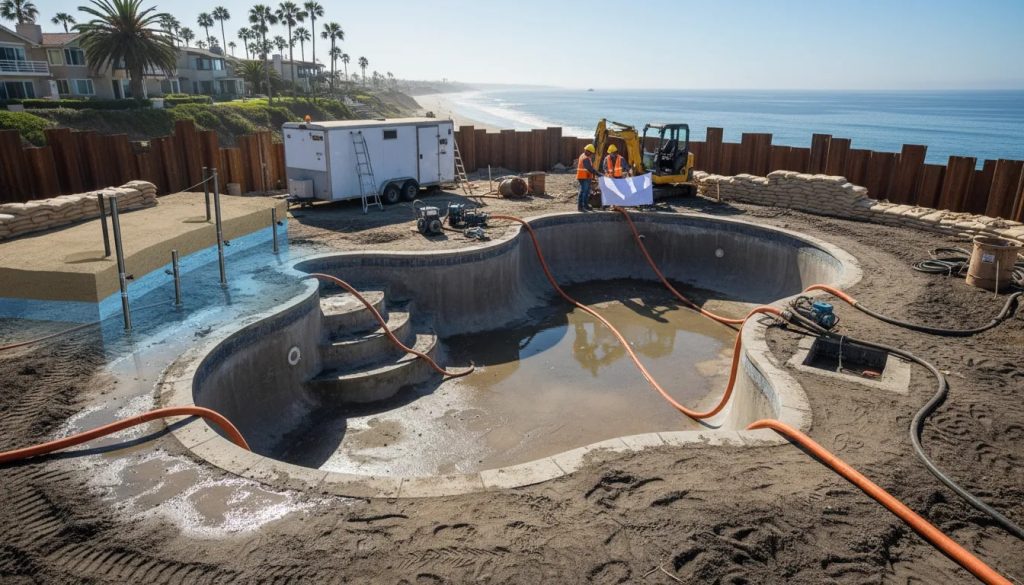
This guide explains how coastal groundwater affects inground concrete and gunite pool construction, what professional builders do to control high water tables, and what homeowners in Huntington Beach and other Orange County coastal cities should expect during a pool project.
Why groundwater control matters on coastal pool builds
Coastal properties often sit on a high or shallow water table. That changes excavation, structural design, and construction sequencing for custom concrete pools. If groundwater is not managed properly it can lead to:
- Floating or heaving pool shells when uplift forces exceed the weight of the structure.
- Delayed schedules from wet excavation, repeated pumping, and failed inspections.
- Corrosion and material degradation from salt air and groundwater exposure unless corrosion-resistant materials are used.
- Permit and inspection complications because local building departments and engineers require documented groundwater solutions.
How contractors control groundwater: proven methods
Experienced builders use one or more of the following methods depending on site conditions, soil tests, and engineer recommendations.
1. Temporary dewatering systems
Wellpoints, deep wells, and sump pumps remove groundwater from the excavation zone during construction. Wellpoint systems lower the water table quickly for shallow excavations. Deep wells and pumps are used for deeper excavations or when more sustained dewatering is required.
2. Structural shoring and bracing
Sheet piling, soldier piles, or steel shoring keep excavation walls stable when groundwater pressure is present. Shoring also protects neighboring structures and prevents collapse during demolition and steel installation.
3. Waterproofing and cutoff walls
Perimeter cutoff walls, slurry walls, or injected grout barriers reduce inflow. These techniques are often used when dewatering is not feasible or when the finished pool must resist continuous groundwater pressure.
4. Permanent drainage and relieving systems
Designs can include permanent internal drains, pressure-relief systems, and perimeter drains that channel groundwater away from the pool shell after construction. These systems reduce uplift risk over the long term.
5. Corrosion-resistant materials
In coastal builds the team selects epoxy-coated or stainless reinforcing steel, corrosion-resistant anchors, and appropriate concrete mixes to minimize long-term deterioration from salt and moisture.
Typical high and wet excavation conditions require early and aggressive groundwater control.
Typical construction sequence for a concrete or gunite pool in a high water table area
- Site evaluation and geotechnical report — soil borings and groundwater level data determine which mitigation methods are needed.
- Engineering and permitting — structural and civil engineers design shoring, foundation details, and drainage; permit submittals include the groundwater control plan.
- Demolition and excavation — excavation begins with temporary dewatering and shoring in place.
- Steel reinforcement and embed installation — structural steel and rebar go in early. When groundwater is present the team may accelerate this stage to minimize exposure time.
- Plumbing and electrical roughed in — installing conduits and skimmer/return lines before shooting the shell.
- Gunite or shotcrete application — the shell is shot once the structure passes required inspections and the excavation is suitably dry or protected.
- Curing, finish plumbing, tile, and decking — final steps include plaster, tile, coping, decking, and equipment startup with permanent drainage systems engaged.
Structural steel and rebar installation is a critical step before the gunite shell is shot.
Realistic timeline expectations
Coastal projects with high groundwater typically take longer than dry-site builds because of added steps: geotechnical testing, dewatering setup, shoring, and often more inspections. A compressed schedule is possible, but only with coordinated crews, immediate inspection availability, and contingency plans for rewater events.
Homeowners should plan for flexible timelines and expect the builder to schedule inspections and gunite shooting only after the site is verified stable and dry enough for a reliable shotcrete application.
Cost factors specific to high water table projects
Groundwater control adds cost drivers beyond standard pool construction:
- Dewatering equipment rental and operation
- Shoring or sheet piling when excavation walls cannot stand on their own
- Engineering and geotechnical fees for site-specific designs
- Special materials such as epoxy-coated rebar or stainless steel elements
- Additional inspections and potential rework if groundwater conditions change
Homeowner checklist before breaking ground
- Obtain a geotechnical report that documents groundwater levels and soil type.
- Confirm the builder has a groundwater control plan stamped by an engineer.
- Ask which dewatering method will be used and how long it will run.
- Verify materials used for reinforcement and anchors are specified for coastal corrosion resistance.
- Discuss contingency schedule allowances for rewatering events and inspection delays.
- Ensure permits include any coastal or city-specific requirements for Huntington Beach or other Orange County jurisdictions.
Gunite or shotcrete is scheduled only after engineers and inspectors approve the prepared excavation and reinforcement.
Common mistakes and what to watch for
- Skipping soil and groundwater testing — surprises during excavation can double costs and delay schedules.
- Using standard rebar near the coast — untreated steel will corrode faster in salt-exposed conditions.
- Rushing the gunite shot — shooting the shell while the site is unstable or wet increases cracking and structural risk.
- Counting on temporary fixes — temporary pumps without a permanent drainage strategy can lead to long-term uplift problems.
- Ignoring local codes and HOA rules — coastal cities often have specific requirements for stormwater, drainage, and erosion control.
Frequently asked questions
Will a pool float if the groundwater is high?
Buoyancy can lift an empty shell when groundwater pressure exceeds the downward weight of the pool and surrounding backfill. Proper drainage, ballast, or permanent relief systems designed by an engineer prevent flotation.
How long does dewatering run?
Temporary dewatering typically runs during active excavation and concrete work. Some sites require longer-term measures until backfill and permanent drainage systems are completed. The dewatering duration is set by the geotechnical recommendations and local permit conditions.
Are concrete and gunite pools suitable for coastal homes?
Yes. Concrete and gunite pools are preferred for coastal custom designs because they allow fully customized shapes and durable construction. When built with corrosion-resistant materials and proper groundwater control they perform well for decades.
Next steps for homeowners in Huntington Beach and Orange County
For a successful coastal pool project homeowners should work with a builder experienced in groundwater mitigation and local permitting. For those planning a backyard transformation, custom concrete pool construction is often the foundation of the design. Learn more about the builder’s approach and services at Werth Builders.
Key takeaways
- High coastal water tables require a deliberate groundwater control plan before excavation begins.
- Common mitigation methods include dewatering, shoring, cutoff walls, and permanent drainage.
- Use corrosion-resistant materials and follow engineer-stamped designs to protect the investment.
- Expect longer timelines and higher costs for coastal projects, but these are manageable with proper planning and an experienced team.
Ready to Transform Your Backyard?
Get a free consultation and estimate for your custom pool, spa, or outdoor living project. Serving Huntington Beach & Orange County.