
Standalone vs Pool-Attached Spas in Huntington Beach
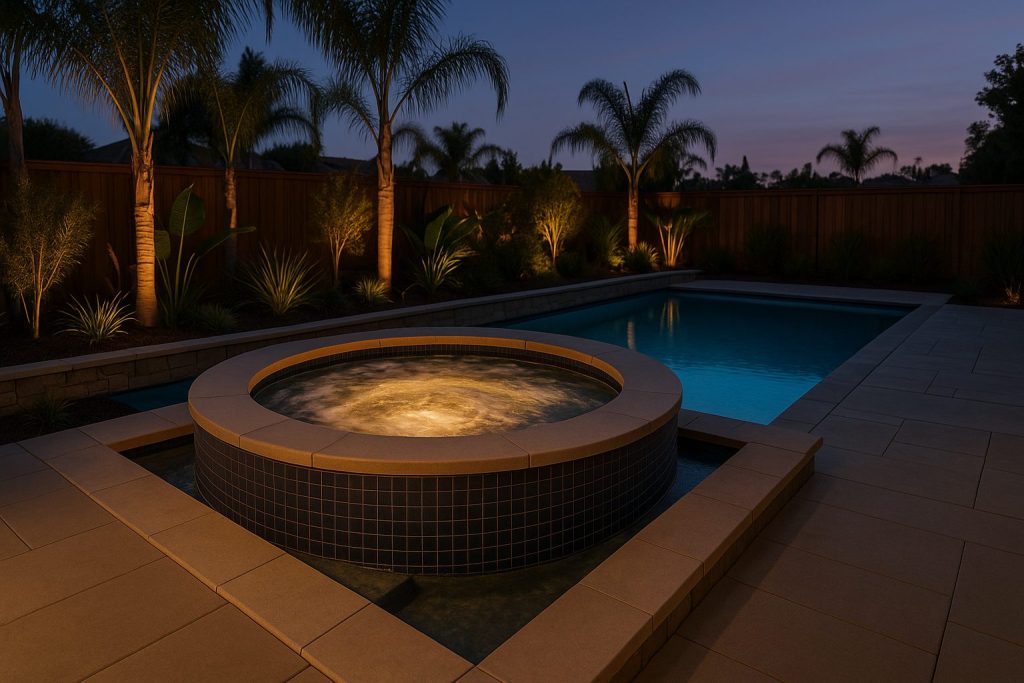
For homeowners in Huntington Beach, adding a spa to your backyard is one of the most rewarding investments you can make. With our year-round Southern California sunshine and cool ocean breezes rolling in off the coast, a spa provides the perfect retreat after a long day — whether you’re unwinding solo or entertaining guests. But one of the biggest decisions you’ll face during the design process is choosing between a standalone spa and a pool-attached spa. Each option offers distinct advantages in terms of heating efficiency, maintenance, design flexibility, and cost, so understanding the differences is essential before breaking ground.
Understanding Standalone vs Pool-Attached Spas in Huntington Beach
A standalone spa — sometimes called a separate hot tub — is an independent structure with its own plumbing, heating system, and filtration equipment. Because it operates on a completely separate system from your pool, you have full control over water temperature and chemistry without affecting your swimming pool. This is especially appealing for Huntington Beach homeowners who want to enjoy a hot soak year-round without heating an entire pool. A pool-attached spa, often referred to as a pool spa combo, is built directly into the pool structure and typically shares plumbing and equipment. With gunite construction — a concrete mixture of cement, sand, and water applied through a high-pressure hose using compressed air — both options can be custom-designed to any shape, size, or depth, giving you unlimited creative freedom. Attached spas often feature stunning spillover edges or raised walls that cascade water into the pool below, creating a cohesive visual centerpiece. To explore custom gunite spa designs, visit our spa design page for inspiration.
Options and Considerations for Huntington Beach Homeowners
When deciding between a standalone spa and an attached spa, Huntington Beach homeowners should weigh several local factors. Because Huntington Beach sits along the coast, soil conditions and water table levels play a significant role in construction planning — an area where experienced coastal specialists make all the difference. A standalone spa is ideal for smaller lots or homeowners who want a spa without committing to a full pool build, and it offers independent heating that can be more energy-efficient for frequent spa-only use. An attached spa, on the other hand, creates a seamless aesthetic and is perfect for families who want both a pool and spa that function as one unified backyard feature. Keep in mind that permits are required for pools holding 3,000 or more gallons, and the permitting timeline can range from two weeks to over two months depending on the jurisdiction. Safety requirements also apply — pool barriers must be a minimum of five feet tall with no gaps allowing a four-inch sphere to pass through, and gates must open outward, away from the pool.
Frequently Asked Questions
What is the best choice for Huntington Beach homes?
The best choice depends on how you plan to use your backyard. If you want maximum flexibility and independent temperature control, a standalone spa is an excellent option — especially for Huntington Beach homeowners with limited yard space who still want a luxurious soak. If you’re building a complete outdoor living area with a pool, an attached pool spa combo built with gunite provides unlimited design freedom, including features like beach entries, waterfalls, and tanning ledges all integrated into one cohesive structure.
How does this affect the overall cost?
In Orange County, custom gunite pool projects typically range from $120,000 to $500,000 or more, depending on complexity and features. Adding an attached spa to a pool build is generally more cost-effective than building a standalone spa separately, since the two structures share plumbing and equipment. A standalone spa as a separate project will have its own engineering, permitting, and equipment costs, but the overall investment may be lower if you don’t need a full pool. Construction timelines typically run 8 to 16 weeks depending on project complexity.
What should I ask my pool builder about this?
Ask whether your builder handles all permit paperwork and engineering approvals, as this can save significant time and stress. You should also inquire about finish options — pebble finishes like PebbleTec last 15–20 years and hide staining better than standard white plaster, which lasts 7–12 years. Finally, ask about on-site supervision and whether the builder provides transparent, no-surprise pricing so you can budget with confidence.
Why Huntington Beach Homeowners Trust Werth Builders
Werth Builders, owned by Peter Werth and established in 1994, brings over 30 years of construction experience to every project in Huntington Beach and throughout Orange County. Licensed with the CSLB (#777-575, B-1 and C-53 classifications), we are coastal soil and water table specialists — a critical advantage for building in Huntington Beach’s unique coastal environment. As a concept-to-completion pool building company, we handle all permit paperwork and engineering approvals, maintain on-site supervisory staff at all times, and provide 3-D video design with 30 still images so you can visualize your spa before construction begins. Our commitment to transparent, no-surprise pricing means you’ll always know exactly what to expect. Contact us today to get started.
Ready to decide between a standalone spa and a pool-attached spa for your Huntington Beach home? Schedule a free consultation with Werth Builders by calling 562-577-5943 or visiting our contact page — we’d love to help you design the perfect backyard retreat.
Ready to Transform Your Backyard?
Get a free consultation and estimate for your custom pool, spa, or outdoor living project. Serving Huntington Beach & Orange County.