
How to Choose the Right Pentair Pool Pump for a Southern California Concrete Pool
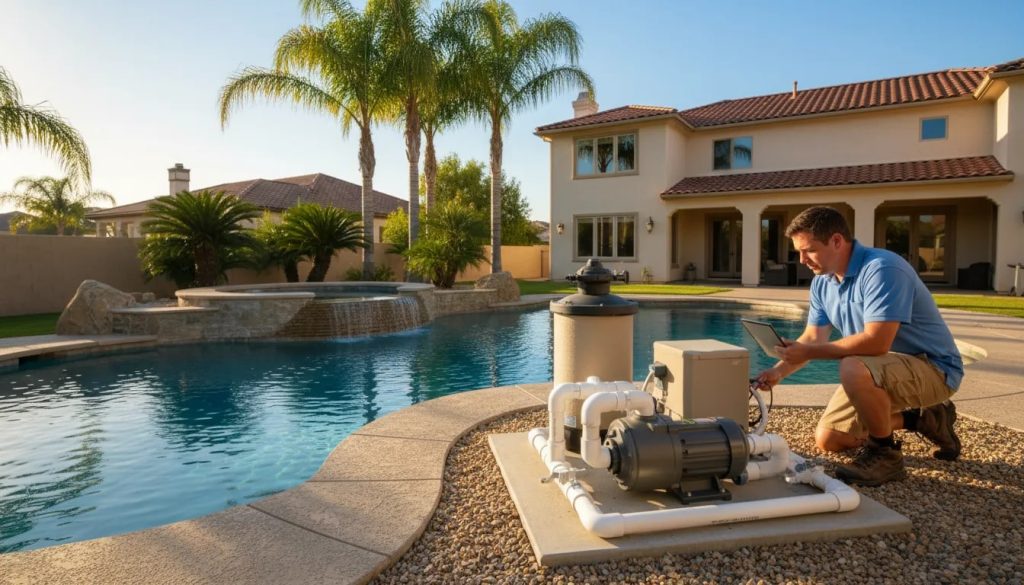
Homeowners planning or renovating a concrete inground pool in Southern California need a pool pump that balances energy efficiency, flow control, and the power to handle features like spas, waterfalls, and in-floor cleaners. Pentair offers several variable-speed models that fit different pool sizes and plumbing layouts. This guide explains how to pick the right Pentair pump for common Southern California scenarios, what measurements matter, and which mistakes to avoid during selection and installation.
Why pump selection matters for concrete (gunite) pools
Concrete pools require reliable circulation to maintain water quality, protect finishes, and support equipment like heaters and salt systems. The pump determines turnover rate, filtration effectiveness, and operating cost. Variable-speed pumps are now the standard for new concrete pool projects because they allow low-speed continuous circulation with periodic high-speed operation for cleaning or heating. For Southern California homeowners concerned about electricity costs and long pump run times, a correctly chosen variable-speed pump delivers the best long-term value.
Key pump characteristics homeowners should evaluate
- Flow vs head — Flow (gallons per minute) and system head (resistance from plumbing, filters, heaters, and water features) determine which pump will meet circulation needs. High-head systems need more torque and pressure, lower-head systems prioritize volume.
- Voltage and electrical compatibility — Some pumps run on 115/120V or 230V; larger models often require 230V service. Confirm available power and whether rewiring is required.
- Variable-speed control and automation — Look for pumps that integrate with pool automation or app controls to schedule speeds and reduce runtime costs.
- Noise and footprint — Quiet operation and a compact housing matter for close-in equipment pads typical of California backyards.
- Durability — Saltwater-ready components, corrosion-resistant materials, and reputable motor construction are essential near the coast.
Pentair model quick comparison and recommended uses
The following summaries explain where each Pentair model typically fits. These are selection guidelines to match pump capability with a concrete pool’s plumbing and features.
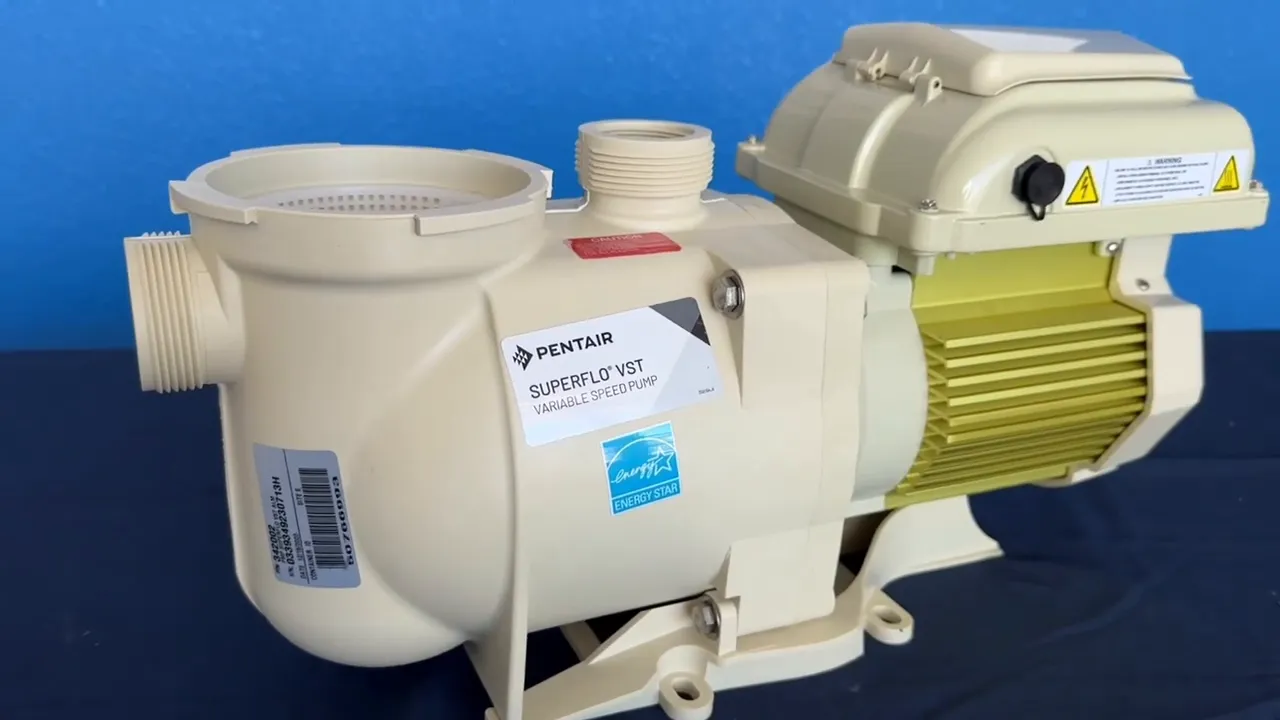
Pentair SuperFlo VS 1.5HP (compact, entry-level variable speed)
The SuperFlo VS is a compact variable-speed option suited to small to medium concrete pools with short plumbing runs and few high-resistance features. It is often chosen to replace single-speed pumps without major electrical changes. Homeowners who want a quieter, energy-efficient upgrade for standard filtration and modest water features will find this model appropriate.
Pentair WhisperFlo VST 2.6HP (high-head performance)
The WhisperFlo VST is built for systems that require higher head pressure. It is a good fit for pools with waterfalls, elevated fountains, in-floor cleaners, or long plumbing runs where additional pump torque is necessary to maintain flow. This model is recommended when features demand brute force while keeping energy-efficient variable-speed operation.
Pentair IntelliFlo3 VSF 1.5HP (versatile residential choice)
The IntelliFlo3 1.5HP offers precise speed control and is well-suited to many standard residential concrete pools. It performs efficiently for everyday circulation and filtration while providing the ability to ramp up for occasional cleaning cycles or heating. Homeowners who value quiet operation and flexible voltage options often select this model.
Pentair IntelliFlo3 VSF 3.0HP (for large pools and complex systems)
The IntelliFlo3 3.0HP is intended for large pools or systems with heavy demands: swim spas, multiple large water features, in-floor cleaning plus long plumbing runs. It typically requires 230V and integrates tightly with automation for advanced scheduling and flow profiles. This model is recommended when maximum controllable flow and head are required.
How to match a pump to a concrete pool: a simple selection checklist
- Calculate or confirm volume and desired turnover — Most residential pools target a 6-8 hour turnover for filtration. Convert volume to required flow rate (GPM) and verify the pump can deliver that flow at your system head.
- Measure system head — Include pipe length, fittings, filter type, heater, valves, and elevation changes. An installer or a hydraulic curve calculation will show which pump curve meets the required flow at that head.
- List pool features — Waterfalls, spa jets, in-floor cleaners, and fountains increase head and transient flow requirements. Count these when sizing the pump.
- Check electrical service — Confirm 115/120V vs 230V availability and whether the equipment pad and panel support the pump’s amperage.
- Plan for integrated controls — If automation, smart-home integration, or off-peak schedules are desired, choose a pump model that supports the control system to maximize savings.
- Factor in noise and footprint — For tight equipment yards typical of SoCal homes, a quieter, compact pump improves livability.
Three Southern California scenarios with recommended pumps
- Small backyard, simple filtration, no major features — A SuperFlo VS or IntelliFlo3 1.5HP typically meets flow needs while minimizing electricity use. These pumps reduce runtime cost and fit small equipment pads.
- Pool with waterfalls and in-floor cleaner — WhisperFlo VST or a higher-capacity IntelliFlo3 is appropriate because these features add head and require higher pressure for reliable operation.
- Large estate pool with spa and long piping runs — IntelliFlo3 3.0HP provides the head and flow flexibility for demanding systems and integrates with automation for scheduled performance and energy management.
Common mistakes and pitfalls to avoid
- Choosing by horsepower alone — Horsepower is not a reliable indicator of suitability. The pump curve and system head determine actual performance.
- Ignoring plumbing restrictions — Undersized pipes, many elbows, or improperly placed valves can cut flow and create noise; correcting plumbing during a remodel often delivers better long-term results than oversizing a pump.
- Assuming a swap is plug-and-play — Some pumps require 230V or different wiring. Plan electrical work and permits into the project.
- Overlooking automation compatibility — Pumps that do not integrate with a homeowner’s automation platform limit scheduling and energy-saving potential.
- Forgetting coastal corrosion protection — Near the ocean, select pumps with corrosion-resistant materials and follow recommended maintenance schedules.
Installation and maintenance tips for longevity and savings
- Run at low speeds for longer periods — Continuous low-speed circulation provides filtration while using far less energy than brief high-speed cycles.
- Schedule periodic high-speed runs — Use higher speeds for backwashing, in-floor cleaning, and spa jets as needed rather than constantly running fast.
- Keep equipment protected — A ventilated, shaded equipment pad reduces thermal stress on the motor and electronics in hot Southern California summers.
- Follow manufacturer maintenance — Regular checks of seals, motor vents, and electrical connections prevent failures and preserve warranty coverage.
- Consider local rebates — Energy providers sometimes offer rebates for variable-speed pump upgrades—verify current incentives to offset upfront cost.
Energy and cost expectations
Variable-speed pumps can dramatically reduce energy consumption compared with single-speed pumps. In many installations, homeowners will see substantial decreases in electricity usage because the pump runs at lower RPMs for most of the day and only uses high speed when necessary. Exact savings depend on local electricity rates, runtime, and the pump schedule, but an upgrade often pays back over several years through lower utility bills.
When to involve a professional contractor
Working with a local contractor experienced in concrete pool systems ensures the pump selection accounts for Southern California specifics: soil and seismic considerations, coastal corrosion, local permitting, and HOA rules. Homeowners planning new builds, major renovations, or complex features benefit from a professional hydraulic analysis and an equipment layout that optimizes flow, noise, and accessibility.
Werth Builders focuses on custom concrete pool construction and can coordinate pump selection, plumbing design, and equipment pad layout to match the homeowner’s design goals and operating budget. Their custom pool service page explains how equipment choices fit into a full build: custom pool construction.
FAQ
Which Pentair pump is best for a pool with a spa and waterfall?
For systems with both a spa and waterfall, a higher-head variable-speed model is recommended. Models designed for higher head and strong torque—such as a higher-rated WhisperFlo or a larger IntelliFlo3—handle the increased resistance while offering energy-efficient low-speed circulation when features are not in use.
For systems with both a spa and waterfall, a higher-head variable-speed model is recommended. Models designed for higher head and strong torque—such as a higher-rated WhisperFlo or a larger IntelliFlo3—handle the increased resistance while offering energy-efficient low-speed circulation when features are not in use.
Can a variable-speed pump replace a single-speed pump without rewiring?
Some variable-speed pumps support 115/120V and 230V, allowing replacement with minimal electrical changes. However, higher-capacity models often require 230V and/or upgraded breakers. An electrician should verify electrical compatibility before purchase.
Some variable-speed pumps support 115/120V and 230V, allowing replacement with minimal electrical changes. However, higher-capacity models often require 230V and/or upgraded breakers. An electrician should verify electrical compatibility before purchase.
Do variable-speed pumps really save money?
Yes. By running at lower speeds for most of the day and only using higher speeds when needed, variable-speed pumps reduce runtime energy use. Exact savings vary with local rates, pool size, and how the pump is scheduled, but energy reductions are typically significant compared with old single-speed pumps.
Yes. By running at lower speeds for most of the day and only using higher speeds when needed, variable-speed pumps reduce runtime energy use. Exact savings vary with local rates, pool size, and how the pump is scheduled, but energy reductions are typically significant compared with old single-speed pumps.
How should homeowners size a pump for long plumbing runs?
Long plumbing runs increase system head. Homeowners should provide pipe layout, lengths, and fitting counts to a contractor who can calculate head and recommend a pump curve that achieves the required flow at that head. Choosing a pump without accounting for head often results in inadequate circulation.
Long plumbing runs increase system head. Homeowners should provide pipe layout, lengths, and fitting counts to a contractor who can calculate head and recommend a pump curve that achieves the required flow at that head. Choosing a pump without accounting for head often results in inadequate circulation.
Summary and next steps
Selecting the right Pentair pump for a Southern California concrete pool is a balance of flow, head, electrical capability, and feature requirements. Homeowners should prioritize variable-speed models for energy savings, verify system head before sizing, and choose a pump that integrates with desired automation. In complex builds or renovations, involving an experienced concrete pool contractor early ensures the equipment selection and plumbing layout deliver reliable performance, lower operating costs, and long-term durability.
Relevant resources: Werth Builders provides guidance and full-service concrete pool construction including equipment selection, and additional insights on outdoor living can be found on their outdoor kitchens page.
Ready to Transform Your Backyard?
Get a free consultation and estimate for your custom pool, spa, or outdoor living project. Serving Huntington Beach & Orange County.