
What to Expect When Building a Custom Concrete Pool in Southern California
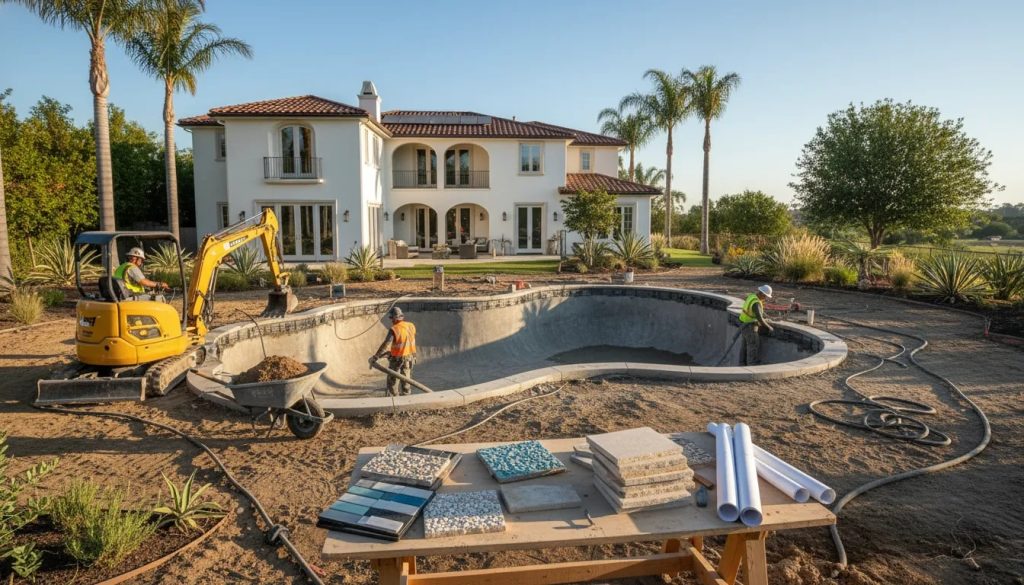
A backyard concrete pool in Southern California is both a lifestyle upgrade and a construction project that requires careful decision making. Homeowners who plan thoughtfully and choose an experienced contractor avoid common delays, keep costs predictable, and end up with an inground pool that matches their lifestyle. This guide explains the entire process for gunite or concrete pools, typical timelines and costs, Southern California considerations, and a practical pre-build checklist for homeowners.
Why choose a concrete (gunite) pool?
Concrete, also known as gunite, is the preferred choice for permanent, custom inground pools. It allows unlimited shapes and features, superior durability, and long-term finish choices such as pebble, quartz, or plaster. Concrete pools are repairable and can be adapted later with new finishes, water features, or automation—qualities that matter for homeowners planning a lasting backyard investment.
High-level timeline: from first meeting to swim-ready
Timelines vary by project complexity and local permitting, but a reasonable high-level schedule for a custom concrete pool is:
- Design and quoting: 2 to 4 weeks (includes initial site visit and 3D design)
- Permit approvals: 2 to 6+ weeks depending on the city and HOA
- Pre-construction and demolition: 1 week
- Excavation: 1 to 3 days (site dependent)
- Steel, plumbing, electrical and gas rough-in: 1 to 2 weeks
- Shotcrete (gunite) and curing: 1 week plus a few days to cure with ongoing watering
- Tile, coping and decking: 1 to 2 weeks
- Equipment installation, interior finish and fill: 1 to 2 weeks
- Final inspections and homeowner orientation: 1 week
Most typical projects complete in 10 to 16 weeks from signed contract to swim-ready, assuming permitting and inspections proceed without major delays.
Step-by-step: what happens during each phase
1. Site visit, design and 3D review
The process begins with a site visit to measure the yard, identify utility locations and discuss goals: desired shape, depth zones, number of users, and features such as tanning ledges, spas, water features or an outdoor kitchen. A detailed 3D rendering helps visualize scale, material choices and circulation before construction begins.
2. Final plans, engineering and permitting
Licensed technicians prepare construction-ready plans with engineering stamps. The contractor typically submits mechanical, structural and grading plans to the local building department. Permit timelines vary; some Southern California jurisdictions process pool permits in two weeks while others take up to six weeks or longer. HOA approvals can add time. Homeowners should expect at least one plan review cycle with building officials.
3. Pre-construction walkthrough and logistics
Before digging, a pre-construction meeting reviews the layout painted on the ground, access points for heavy equipment, tree removals, existing structures, and protection of adjacent landscaping. Decisions about temporary fencing, staging areas and damage responsibility are finalized.
4. Excavation (dig day)
Excavation crews dig to engineered elevations and carve interior features such as benches or shelves. Soil type and groundwater can extend this phase. Sandy coastal soils or hard clay require different equipment and sometimes additional shoring or dewatering.
5. Structural shell: rebar, plumbing, electrical and gas
After excavation, crews install plumbing lines to skimmers, drains and the equipment pad, electrical conduits and gas lines for outdoor kitchens or fire features. Steel reinforcement is installed around the perimeter and within walls and beams to create a robust shell that resists shifting and long-term loads.
6. Shotcrete (gunite) and curing
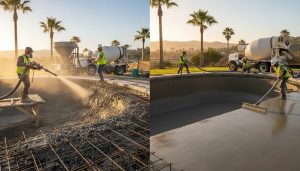
High-pressure shotcrete is applied to the steel framework to form the pool shell. Crews shape steps and interior shelves before the material cures. Concrete pools require controlled curing—regular wetting and protection—so the shell gains strength without cracking. Curing practices and timing are critical for long-term durability.
7. Tile, coping, decking and equipment hookup
Once the shell cures, tile and coping are installed, decking is poured or placed, and pool equipment is set on the equipment pad and plumbed and wired into the system. Inspections are often required before moving to the next stages.
8. Interior finishes, fill and startup
Interior finishes such as plaster or pebble are applied, the pool is filled (typically 16 to 24 hours with a garden hose for a standard residential pool) and startup chemicals are added. Stopping the fill prematurely can cause a visible waterline ring, so continuous fill is important until the water reaches the recommended level. Final inspections and a homeowner orientation complete the process.
Typical cost ranges and what drives price
Costs depend heavily on size, site complexity, finishes and special features. In Southern California, basic inground concrete pools generally start in the low six-figure range, with many custom projects falling between roughly $120,000 and $300,000+. Key cost drivers:
- Site conditions: grading, soil type, access, retaining walls and demolition
- Pool size and depth: larger volumes need more materials and equipment
- Interior finish: plaster, pebble or quartz differ in cost and longevity
- Tile, coping and decking materials
- Automation, heating and equipment upgrades
- Water features, spas, fire features and outdoor kitchens
These are general ranges. Accurate pricing requires a site visit, engineered plans and a permitting review.
Design choices and feature checklist
Design choices should match the homeowners’ lifestyle. Common features and considerations:
- Shallow sun shelf: great for families with small children and lounging
- Integrated spa: adds relaxation and year-round use
- Water and fire features: waterfalls, spillways and fire bowls create ambiance
- Decking materials: concrete, pavers, tile or natural stone affect maintenance and heat retention
- Automation and safety: pool automation, covers and safety fences improve convenience and compliance
- Outdoor kitchens and pavilions: plan utility runs and setbacks early
When considering an outdoor kitchen or integrated living area, homeowners should evaluate traffic patterns and how the pool will interface with dining and cooking spaces. For outdoor kitchen ideas, see https://werthbuilders.com/outdoor-kitchens/.
Southern California-specific considerations
- Coastal soils: sandy or silty soils near the ocean require different engineering for stability and drainage.
- Groundwater: high water tables can require dewatering during excavation and influence chosen equipment and drainage design.
- Local building codes and inspections: jurisdictions vary—some require plan checks, structural reviews and multiple inspections during construction.
- Drought and water use: homeowners should plan for water-efficient landscaping, cover options and consider pool covers to reduce evaporation.
- HOA rules and setbacks: HOA restrictions and property setbacks can affect layout and permitted features.
Common pitfalls and how to avoid them
- Underestimating permitting time: start permit paperwork early and budget 4 to 6 weeks for approvals in many cities.
- Poor site access planning: verify how heavy equipment will reach the yard; unexpected access issues increase cost and schedule risk.
- Skipping soil investigation: a geotechnical review reveals groundwater and soil stability issues before demolition.
- Changing scope mid-build: late design changes are expensive and cause schedule delays; finalize major features before permits are pulled.
- Choosing cheap equipment or finishes: initial savings can lead to higher operating costs and earlier replacement.
Homeowner pre-build checklist
- Confirm property lines, easements, and HOA restrictions
- Gather utility locations and call 811 before excavation
- Prioritize must-have features versus nice-to-haves for budget control
- Discuss access, staging and potential tree removals with the contractor
- Ask for construction-ready plans and engineering stamps before permits
- Verify the contractor’s California license and insurance; reference CSLB guidance
- Plan landscaping and irrigation with drought-tolerant choices
Pitfalls specific to coastal builds
Near the ocean, salt air accelerates corrosion of metal components and affects material selection. Choosing corrosion-resistant equipment and specifying proper concrete mixes and coatings extend the life of the pool. Structural engineers will often specify additional reinforcement or different material grades for coastal exposures.
How inspections typically work
Municipal inspectors commonly review these stages:
- Pre-pour checks for underground plumbing and electrical
- Rebar and reinforcement inspection before shotcrete
- Decking and electrical final inspections
- Final occupancy and safety inspections after fill and equipment startup
Failed inspections can occur and they must be corrected; experienced contractors factor expected inspection cycles into the schedule.
Who to hire and what to verify
Homeowners should work with a licensed California contractor experienced in concrete pools and familiar with local jurisdictions. Verify the contractor’s CSLB license, ask for references or local projects, and request a clear scope of work that includes permit acquisition, engineered plans and a construction timeline. For sample service details, see https://werthbuilders.com/services/pools/.
Practical maintenance and startup tips
- Plaster cure and start-up: interior finishes may require brushing and a careful chemical balance during initial weeks.
- Continuous fill: avoid stopping the fill process early to prevent a waterline ring; fill to the recommended waterline in one continuous operation.
- Equipment orientation: learn equipment controls, automation and basic maintenance during the final walkthrough.
How long does it take to build a custom concrete pool in Orange County?
What permits are required for a residential pool in Southern California?
How much does a custom concrete pool cost?
What soil or site issues commonly add cost?
Final thoughts for Southern California homeowners
Building a custom concrete pool is an investment that transforms how a family uses outdoor space. Homeowners who allocate time to planning, choose durable materials appropriate for the coastal environment, and work with licensed contractors familiar with local codes typically enjoy smoother projects and better long-term value. For a local resource and additional project examples, homeowners can reference Werth Builders at and explore related outdoor living services at https://werthbuilders.com/outdoor-kitchens/.
Homeowners who invest time in the design and permitting phase often find projects run smoother and finish faster. A well-documented plan and clear expectations with the contractor reduce surprises and help turn a backyard into a lasting Southern California retreat.
Ready to Transform Your Backyard?
Get a free consultation and estimate for your custom pool, spa, or outdoor living project. Serving Huntington Beach & Orange County.