
Keep a Pool Open All Winter: 8 Practical Safety Steps for Homeowners
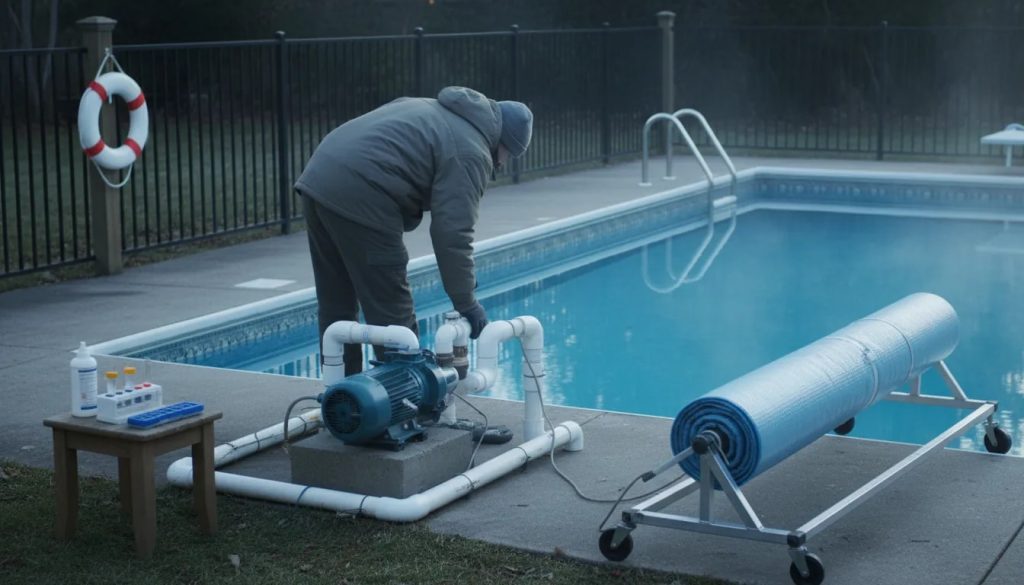
Why some homeowners leave pools open through winter
Keeping a residential pool open all winter can be a smart choice in milder climates. Homeowners who opt to keep their pool active avoid the time, cost, and visual impact of winter covers and the annual ritual of winterizing and reopening. In many regions, algae growth slows dramatically once water temperatures fall below about 60 degrees Fahrenheit (16 degrees Celsius), meaning fewer chemicals and less effort to maintain clear water.
That said, staying open year round is not without trade-offs. Utilities, especially when heating or running pumps consistently, can cost more during colder months. Salt systems and heat pumps perform poorly below specific temperatures. And when freezing temperatures are possible, moving water and freeze-protection measures are essential to protect plumbing and equipment.
Eight essential steps to keep a pool open safely through winter
-
Keep valves at least partially open
Any branch of the circulation system that can be closed should be left at least partially open so water can keep moving. That includes skimmer lines, cleaner lines, main drains, returns, and lines to water features or attached spas. Stagnant water in a closed line is the highest risk for freeze damage.
-
Run pumps to maintain circulation
Circulating water resists freezing. When overnight temperatures approach freezing, homeowners should run pumps continuously. In milder winter months with no freeze risk and little debris, a few hours of daily circulation may be sufficient. If leaves and organic matter accumulate, increase runtime and clean filters more frequently.
-
Maintain water temperature when necessary
In cold climates running a pump alone will not prevent freeze damage. A heater is required to keep water above critical thresholds—generally around 40 degrees Fahrenheit—to protect plumbing. In warmer or mild coastal areas of Southern California, a solar cover can trap daytime heat and reduce heating costs. For pools not in use, a more substantial cover helps retain heat and keep debris out.
-
Install a freeze sensor or built-in freeze protection
Freeze sensors monitor air and/or water temperature and automatically start the pump if temperatures drop toward freezing. Some modern pumps include built-in freeze protection controls, which are especially useful for homeowners who do not want to run pumps 24/7.
-
Winterize sensitive water features
Fountains, waterfalls, deck jets, and spa jets are vulnerable to freeze damage. Consider turning these off and shutting associated valves for the season while keeping primary circulation running to protect main plumbing.
-
Keep the pool clean on a schedule
Maintenance requirements drop in colder weather, but consistent cleaning is still essential. Skim at least twice a week when debris is present, brush walls weekly, and vacuum at least once per week. If trees drop heavy leaf loads, an automatic cleaner designed for leaves can save time and protect filtration equipment from overload.
-
Maintain balanced water chemistry
Cold water reduces sanitizer demand, but chemistry must remain in safe ranges to protect surfaces and equipment. Test and balance total alkalinity and pH weekly. Target ranges include:
- Total alkalinity: 100–150 ppm
- pH: 7.4–7.6
- Calcium hardness: 175–225 ppm for vinyl liners; 200–275 ppm for plaster or concrete
- Cyanuric acid (CYA): 30–50 ppm (do not add extra CYA unless needed)
- Chlorine: around 1 ppm in winter; consider increasing to 3 ppm or weekly shocking once water temperatures climb above 60 degrees Fahrenheit
-
Monitor water level
Keep the water level at least halfway up the skimmer mouth so the pump does not draw air. Low water can cause cavitation and damage to the pump and filter during extended winter operation.
Emergency steps if the pump or filter stops during freezing weather
If the circulation system fails while ambient temperatures are at or below freezing, rapid action reduces risk of costly damage. First, turn off power at the breaker to prevent automatic restarts. Then, loosen drain plugs on the pump, heater, filter, and other equipment to allow any trapped water to escape. Close line valves to isolate equipment and open the filter air relief (bleeder) valve to release pressure. These steps limit freeze damage until professional service can restore reliable operation.
Decision guidance for Southern California homeowners
In Southern California and other mild-winter regions, many homeowners find it more convenient and economical to keep pools open year round. Running pumps intermittently, monitoring chemistry, and using a solar cover for heat retention often provide a low-maintenance winter routine. In regions with frequent hard freezes, complete winterization is typically the safer route to protect plumbing and equipment.
Working with an experienced local contractor ensures the winter strategy and any freeze-protection upgrades consider regional conditions, permit implications, and long-term equipment efficiency. Homeowners can review services like custom pool design and seasonal maintenance at https://werthbuilders.com/services/pools/ and find company information at https://werthbuilders.com. For outdoor living complements such as kitchens that extend backyard use year round, see https://werthbuilders.com/outdoor-kitchens/.
Quick checklist for keeping a pool open this winter
- Leave valves partially open
- Run pumps when temps dip below 40°F (4°C); run continuously near freezing
- Use a heater if temps regularly fall well below freezing
- Install freeze sensors or use pumps with freeze protection
- Shut off and winterize decorative water features
- Skim, brush, and vacuum on a regular schedule
- Test and adjust chemistry weekly
- Keep water level at or above the skimmer midpoint
Is it cheaper to keep a pool open or winterize it?
Can a salt chlorine generator be used in winter?
How often should water chemistry be tested in winter?
What should homeowners do if the pump fails during a freeze?
Final considerations
Keeping a pool open through winter is a practical choice for many homeowners when local climate, equipment capability, and willingness to perform a modest maintenance routine align. The priority is to prevent freeze damage through circulation, sensible use of heaters or covers, and reliable freeze protection. With those safeguards in place, a winter-open pool can remain clean, safe, and ready for use in milder months.
Ready to Transform Your Backyard?
Get a free consultation and estimate for your custom pool, spa, or outdoor living project. Serving Huntington Beach & Orange County.