
How Builders Salvage a Gunite Pool After a Muddy Shot (Southern California)
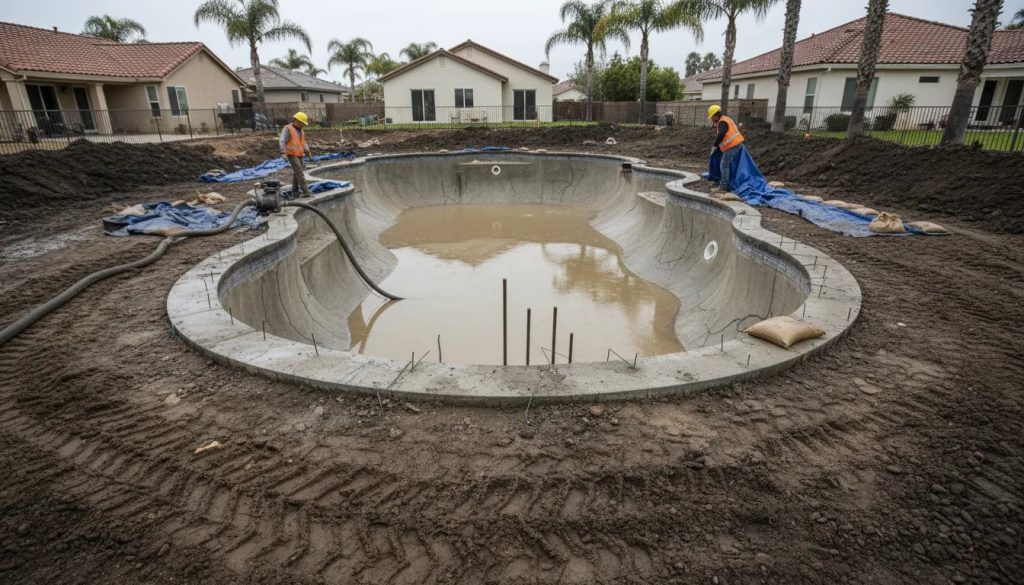
When a newly shot gunite shell sits on a wet, muddy jobsite there are clear, immediate risks and a set of proven steps builders follow to protect structural integrity and keep the project on schedule. This guide explains how contractors assess fresh gunite, manage standing water and mud, repair hairline cracks, and reduce long-term issues—especially for Southern California jobs in places like Huntington Beach and Orange County.
What homeowners and builders need to know about gunite (gunnite)
Gunite is pneumatically applied concrete used for fully custom, durable pool shells. It is the standard for inground concrete pools because it allows complex shapes, variable depths, and long service life. Proper application, curing, and site drainage are essential to avoid cracking, delamination, and structural problems.
Common problems that appear right after shooting the gunite
- Surface hairline cracks from minor shrinkage during drying.
- Cold joints or weak spots if material dries unevenly or is disturbed.
- Water infiltration from rain or groundwater causing washout behind the shell.
- Site mud and unstable access that interferes with finishing, plumbing, and equipment access.
- Pump and dewatering issues when runoff overwhelms temporary systems.
First 24 hours: assessment checklist for a muddy, just-shot pool shell
- Visual inspection of walls and floor for major displacement, sagging, or large cracks.
- Tap test (sounding) to detect delamination or hollow spots on the shell.
- Confirm pumps and dewatering are operational and sized correctly for site runoff.
- Document conditions with photos and notes: locations of cracks, water entry, and muddy areas.
- Protect plumbing openings from clogging with mud by capping or filtering intake lines.
How builders evaluate and respond to cracks in fresh gunite
Not all cracks indicate structural failure. Most early cracks are hairline shrinkage cracks that can be treated during plaster or finish stages. The response depends on size, location, and behavior over time.
Classification and immediate response
- Hairline shrinkage cracks under 1/16 inch: monitor and mark location; usually fillable during plaster.
- Cracks 1/16 to 1/8 inch: evaluate for movement; consider epoxy injection or routed-and-sealed repair if they widen.
- Cracks larger than 1/8 inch or showing separation: require structural evaluation and possible localized removal and re-gunite or grout repair.
Managing pumps and dewatering on a muddy site
Keeping water away from the shell and work areas is crucial. Proper dewatering both preserves the shot shell and keeps subcontractors productive.
Practical dewatering steps
- Install submersible pumps at low points and route discharge away from the excavation.
- Use sediment basins, filter socks, or rock check dams to reduce turbidity and protect storm drains.
- Increase pump capacity if runoff exceeds current dewatering rates; maintain redundancy (spare pumps) during heavy rain windows.
- Keep plumbing intakes screened to prevent mud from clogging equipment.
Controlling mud and site erosion
Mud creates safety hazards and can compromise finishing work. Fast, methodical site cleanup preserves schedule.
Best practices
- Temporary gravel pads at access points reduce tracking and provide safer staging for crews and equipment.
- Designated wash areas with silt traps keep mud contained when cleaning tools and concrete trucks.
- Timely grading to direct surface flow away from the pool shell until permanent drainage is installed.
- Use mats or temporary boardwalks to access critical plumbing and pump locations without disturbing the shell.
Testing, monitoring, and the next steps before finishing
After the initial emergency containment and minor repairs, ongoing monitoring ensures the shell stabilizes properly before continuing with tile, plaster, and equipment installation.
- Regular inspections during the first 7 to 14 days to ensure cracks are not propagating.
- Moist-cure protocols where appropriate to reduce rapid drying in hot climates; this helps strength development.
- Pressure testing plumbing once accessible to confirm no leaks that could contribute to washout.
- Coordinate with the engineer for any repairs that could affect structural integrity or require a design revision.
Prevention: planning to avoid wet/muddy complications
Many mud-related setbacks are preventable with early planning.
Pre-job preparation checklist
- Review seasonal weather and plan gunite shots during predictable dry windows.
- Install temporary drainage improvements before excavation if the site has a history of surface or groundwater issues.
- Confirm availability of backup pumps on gunite day and ensure power sources are protected from mud and water.
- Include contingency time and budget for weather-related delays in the project schedule.
Southern California considerations
Coastal and Orange County jobs have specific conditions that affect pool builds.
- Soil types vary from sandy coastal profiles to clay inland; each affects dewatering strategy and backfill compaction.
- Local permits and inspections may require documented repairs and re-inspections after adverse weather events.
- Drought-aware landscaping and efficient equipment choices are often part of the design conversation in cities such as Huntington Beach, Irvine, Costa Mesa, Newport Beach, and Laguna Beach.
Common mistakes and pitfalls to avoid
- Ignoring small early cracks without documenting them; lack of monitoring allows small issues to grow.
- Underestimating dewatering needs and relying on a single pump during heavy runoff.
- Allowing trades to track mud into areas where finish work will occur, causing rework.
- Skipping engineer consultation when cracks exceed cosmetic size or are accompanied by movement.
Quick reference: action plan for a muddy gunite day
- Secure pumps and establish multiple discharge points.
- Inspect and document the shell for cracks and deflection.
- Protect plumbing openings and cap where needed.
- Install temporary erosion controls and gravel access pads.
- Monitor shell daily and involve the structural engineer if cracks change.
- Plan repairs during finish stage for hairline cracks; schedule structural repairs immediately for larger cracks.
Frequently asked questions
Are hairline cracks normal after gunite?
Yes. Very fine shrinkage cracks are common and typically addressed during plaster or finish. Larger cracks need assessment to rule out structural issues.
When should an engineer be called?
If cracks are wider than about 1/8 inch, if there is noticeable movement, or if the shell shows signs of displacement, an engineer should evaluate the shell before proceeding.
Can mud behind the shell cause long-term problems?
Excessive washout and suspended fine sediment that remains behind the shell can create voids or reduce proper compaction, which may lead to settlement. Proper dewatering and backfill compaction mitigate this risk.
Resources and next steps for homeowners planning a concrete pool
For homeowners planning a backyard transformation, custom concrete pool construction is often the foundation of the design. Learn more about professional services at https://werthbuilders.com/services/pools/ and visit the company homepage for an overview: https://werthbuilders.com
Summary
When a gunite pool is placed on a muddy jobsite, rapid assessment, adequate dewatering, containment of mud, and careful monitoring of cracks are the primary actions that save the project. With the right equipment and a methodical approach, most early issues are manageable and do not compromise the long-term durability that concrete and gunite pools provide.
Ready to Transform Your Backyard?
Get a free consultation and estimate for your custom pool, spa, or outdoor living project. Serving Huntington Beach & Orange County.