
What Nobody Tells You About Building a Concrete Pool in Southern California
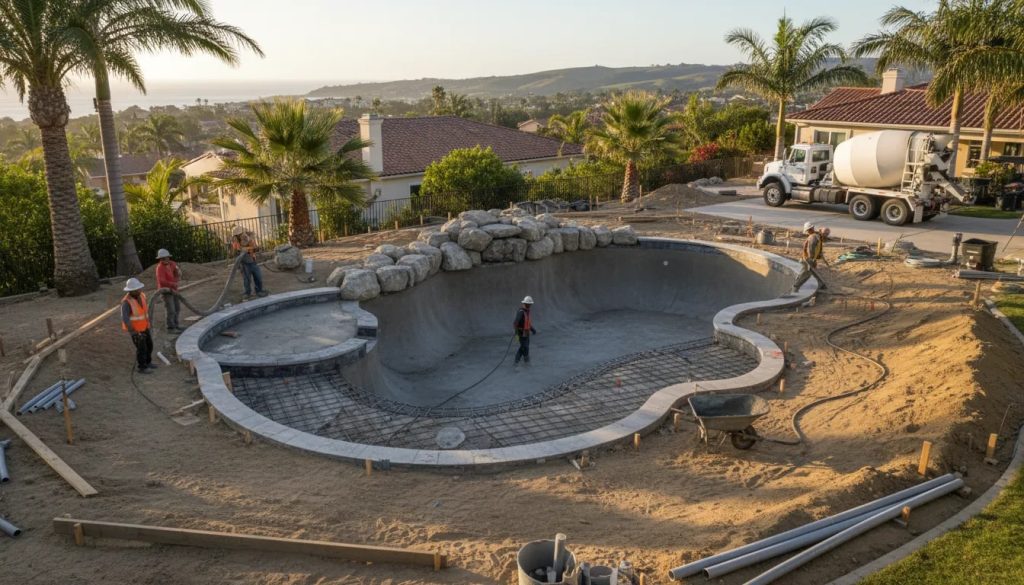
A backyard concrete pool can transform life in Orange County into a year-round resort. Homeowners considering a custom pool should understand the full process, typical hidden costs, local permitting hurdles, and the choices that most affect long-term performance. This guide explains the steps of a concrete (gunite) pool build, Southern California specifics such as coastal soil and HOA considerations, and a practical checklist to reduce surprises during construction.
Why choose a concrete (gunite) pool
Concrete and gunite pools offer the greatest design flexibility and longevity. Unlike fiberglass shells or vinyl liners, concrete structures can be built in virtually any shape, support integrated features such as tanning ledges and waterfalls, and last for decades with proper maintenance. For homeowners who want a true custom backyard—spa integration, water features, pavers and outdoor kitchens—concrete is the construction method most designers recommend.
Overview: the concrete pool construction process
Building a concrete pool follows several predictable phases. Each phase has decisions that affect cost, timeline and how much of the landscape will need repair afterward.
- Survey and site planning — Establish property lines, setbacks, existing utilities and usable green space.
- Design and engineering — Produce site plans, structural engineering and a permit-ready plan set.
- Permits and HOA approval — Submit plans to the city and any HOA; address coastal or floodplain requirements if applicable.
- Excavation and equipment trenching — Dig the pool, leave stockpiled soil, and run initial plumbing/electrical trenches.
- Steel and shotcrete/gunite — Install rebar cage and spray shotcrete to form the shell.
- Tile, coping and finishes — Install waterline tile, edge coping and select the interior finish (pebble, quartz, plaster).
- Decking, landscaping and fencing — Place concrete or pavers, install fencing for safety, and restore or replace turf and planting.
- Equipment hookup and startup — Connect pumps, filtration, heaters, automation and lights; test water chemistry and systems.
Survey and site plan: the phase most homeowners underestimate
Surveying establishes where the pool can sit and whether the yard has the space for the desired shape once setbacks, easements and required green area are considered. In Southern California, a professional survey is commonly required and typically costs a few thousand dollars. Budget this as a separate line item rather than assuming it is included in a contractor’s base price.
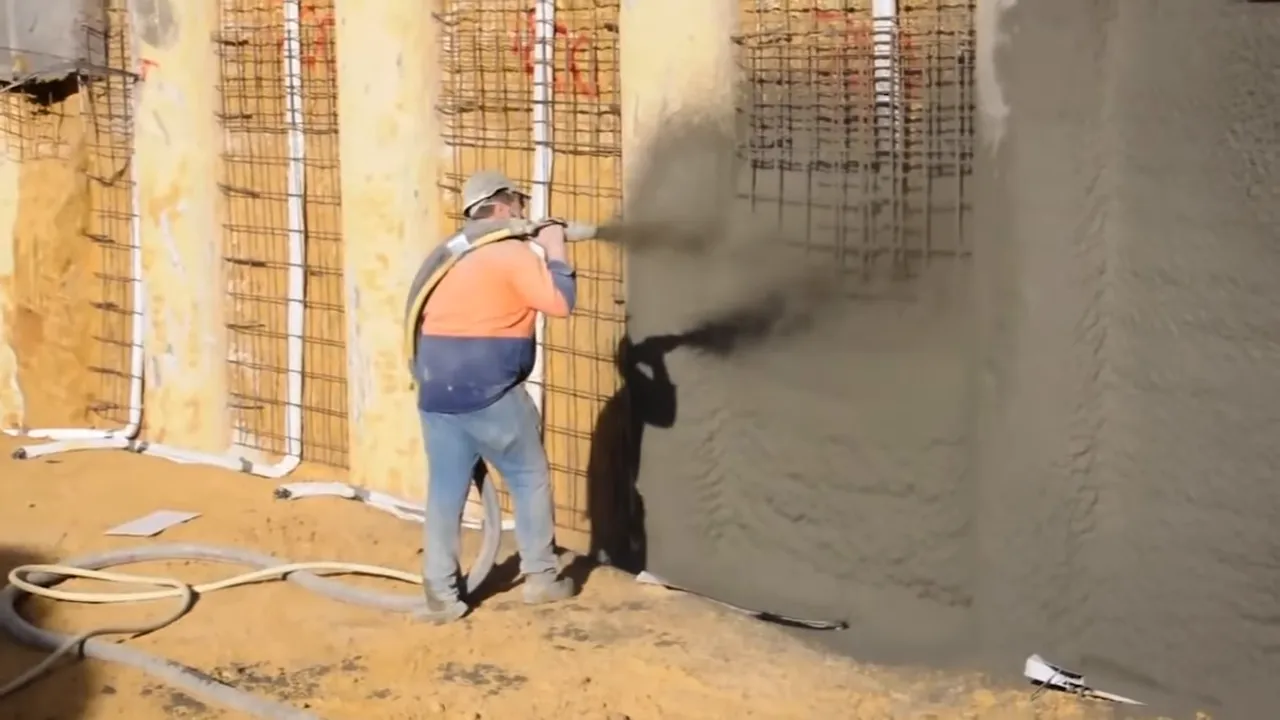
Gunite and shotcrete: building the structural shell
Concrete pools use a rebar skeleton sprayed with gunite or shotcrete to form a monolithic shell. This stage determines the pool’s longevity and structural integrity. Proper steel layout, adequate thickness and experienced placement crews reduce risk of cracking and long-term issues. Homeowners should request engineered drawings and confirm quality control steps before shotcrete is scheduled.
Tile, coping and interior finishes
Tile and coping choices are highly visible and driven by availability and lead times. Specialty tiles sometimes have long lead times, so selecting finishes early in the project reduces delays. Popular durable finishes in the region include pebble and quartz blends that resist staining and fading in coastal environments.
Decking and landscaping: plan for restoration
Heavy equipment compacts and displaces soil across the yard. Many homeowners assume the contractor will fully restore sod and landscaping; often that cost is extra. Deciding between concrete decking, pavers or natural stone at the start prevents the need to demo and re-do surfaces later. Pavers, though more expensive initially, are frequently preferred for drainage, aesthetics and long-term maintenance.
Key decisions that drive cost and performance
- Pool type — Concrete/gunite is the recommended choice for custom design and longevity in Southern California.
- Interior finish — Pebble and quartz finishes are more durable than traditional plaster and are recommended in coastal climates.
- Decking material — Concrete is economical; pavers cost more but offer easier repairs and better drainage.
- Heating and automation — A pool heater extends usable months and automation increases usability; include poolside or spa-side remotes for convenience.
- Water system — Saltwater systems reduce routine chlorine handling but still require regular maintenance and monitoring.
Common hidden costs and realistic budget items
Contract proposals often list a base price for the pool shell and equipment. Several predictable additions frequently increase the final invoice:
- Survey and engineering — $1,500 to $3,500 depending on lot complexity.
- Permits and plan modifications — City fee schedules vary; coastal and hillside lots can be more expensive.
- Fencing and safety barriers — Required by most municipalities; can range from a few thousand dollars to tens of thousands for large yards or custom glass fencing.
- Temporary yard protection and final landscaping — Sod replacement, added fill dirt and plant restoration often add several thousand dollars.
- Upgrades and finishes — Tile, coping, lighting, heaters and automation often represent a significant portion of options.
- Electrical upgrades — Older homes may need service-panel upgrades or new conduit runs for equipment.
Example budgets in Southern California for concrete pools typically start in the mid-five-figure range for a modest pool and can rise substantially with premium finishes, extensive decking, or full outdoor living integration. Homeowners should reserve a contingency fund of 10 to 20 percent for unavoidable extras discovered during construction.
Typical timeline
- Planning and design — 2 to 8 weeks depending on revisions and HOA approval.
- Permitting — 2 to 12+ weeks depending on city workload and coastal/variance requirements.
- Construction — Excavation through shell: 2 to 4 weeks; tile, decking and equipment: additional 2 to 6 weeks.
- Total from contract to water-on — 8 to 16 weeks is common, though delays in material delivery or permit processing can extend this.
Maintenance expectations and operating costs
Operating costs vary by pool size, system efficiency and water chemistry approach. Common recurring costs include chemicals, periodic filter media replacement, power to run pumps and occasional professional service. Monthly maintenance for a residential concrete pool can range significantly; a reasonable planning figure is a few hundred dollars per month for routine care. More advanced features such as heaters and RGB lighting will increase electrical consumption.
Safety, compliance and local regulations
Most jurisdictions require a safety barrier—fence, gate, or compliant pool cover—before the project can be signed off. Some cities also require temporary fencing during construction. Coastal zones, sloped lots and areas over certain soil types may trigger additional structural requirements. Homeowners should confirm permit conditions early and factor fence costs into the budget rather than waiting until final inspection.
Common mistakes and how to avoid them
- Assuming the yard will be fully restored — Clarify who is responsible for final landscaping and sod replacement before signing.
- Delaying finish selection — Tile, coping and interior finishes impact the schedule; pick these early to avoid long lead-time delays.
- Under-budgeting for fencing and permits — These line items can surprise many homeowners; include them in the initial budget estimate.
- Prioritizing lowest bid without verification — Verify contractor licensing with the CSLB, request references and confirm that the proposal includes engineered drawings and permit handling.
- Skipping a heater or automation — Without a heater, colder months see far less use. Automation and poolside controls greatly increase convenience and satisfaction.
Checklist before signing a pool contract
- Confirm the contractor is licensed and bonded. Verify with the Contractors State License Board.
- Obtain a written scope that lists what is included and excluded: survey, permits, demolition, sod restoration, fencing, decking, electrical upgrades and contingency items.
- Request a project schedule with milestone dates and a change-order process.
- Review engineered plans and confirm who will obtain permits and HOA approvals.
- Allocate a contingency budget for unforeseen site conditions, additional fill, or landscaping.
Southern California specifics to plan for
Coastal properties can face sandy soils and salt-laden air, which influence material choices and corrosion protection. Hillside lots may require additional retaining walls or structural engineering. HOA rules in many Orange County neighborhoods can restrict fencing styles, pool equipment placement and visible decking materials. Working with a local contractor experienced in these conditions helps avoid redesigns and permit denials.
Working with an experienced local contractor ensures the design process accounts for Southern California’s unique building requirements and reduces the chance of expensive surprises.
Service links and resources
For homeowners exploring professional help for a concrete pool project, Werth Builders provides concept-to-completion services tailored to Orange County climates and coastal conditions. Learn more about general company services at Werth Builders.
For specifics on custom pool builds and gunite construction, a relevant service page is available at Custom Pool Construction | Werth Builders.
Homeowners who plan to pair a pool with an outdoor kitchen or entertain space can review outdoor kitchen integration options at Outdoor Kitchens Southern California.
Frequently asked questions
How long does it take to build a custom concrete pool in Orange County?
What is the difference between gunite and fiberglass pools?
How much should homeowners budget for fencing and landscaping?
Is a pool heater necessary in Southern California?
Final takeaway
A custom concrete pool is an investment in lifestyle and property value, but it requires careful planning, a realistic budget and competent local expertise. Prioritize early surveying, engineered plans, clear contract scope and accounting for fence, landscaping and permit costs. With those elements in place, building a durable, beautiful concrete pool in Southern California becomes a manageable project that delivers long-term enjoyment.
Ready to Transform Your Backyard?
Get a free consultation and estimate for your custom pool, spa, or outdoor living project. Serving Huntington Beach & Orange County.