
How to Reduce High Pressure in a Concrete Pool System (PSI Guide + Fixes)
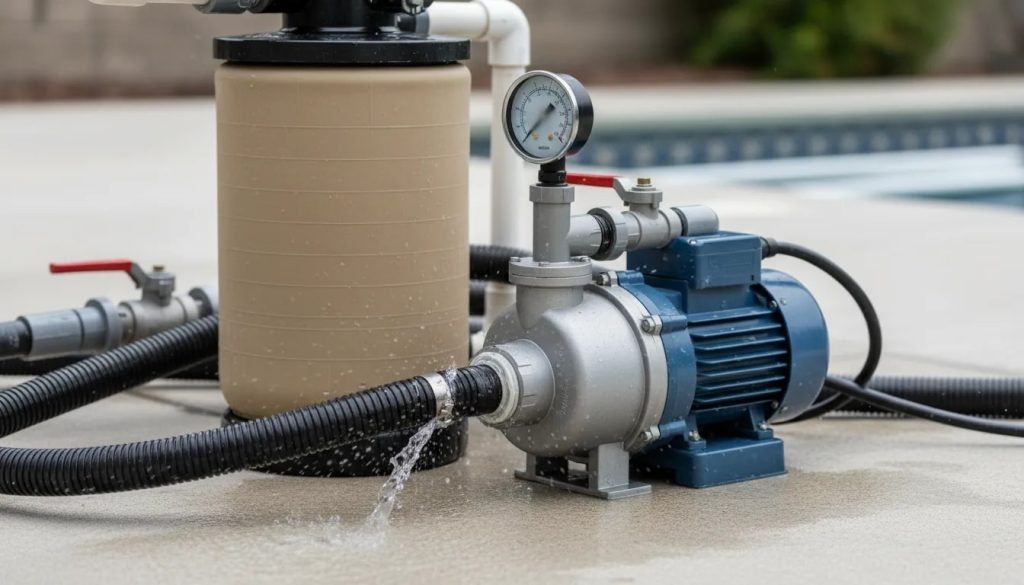
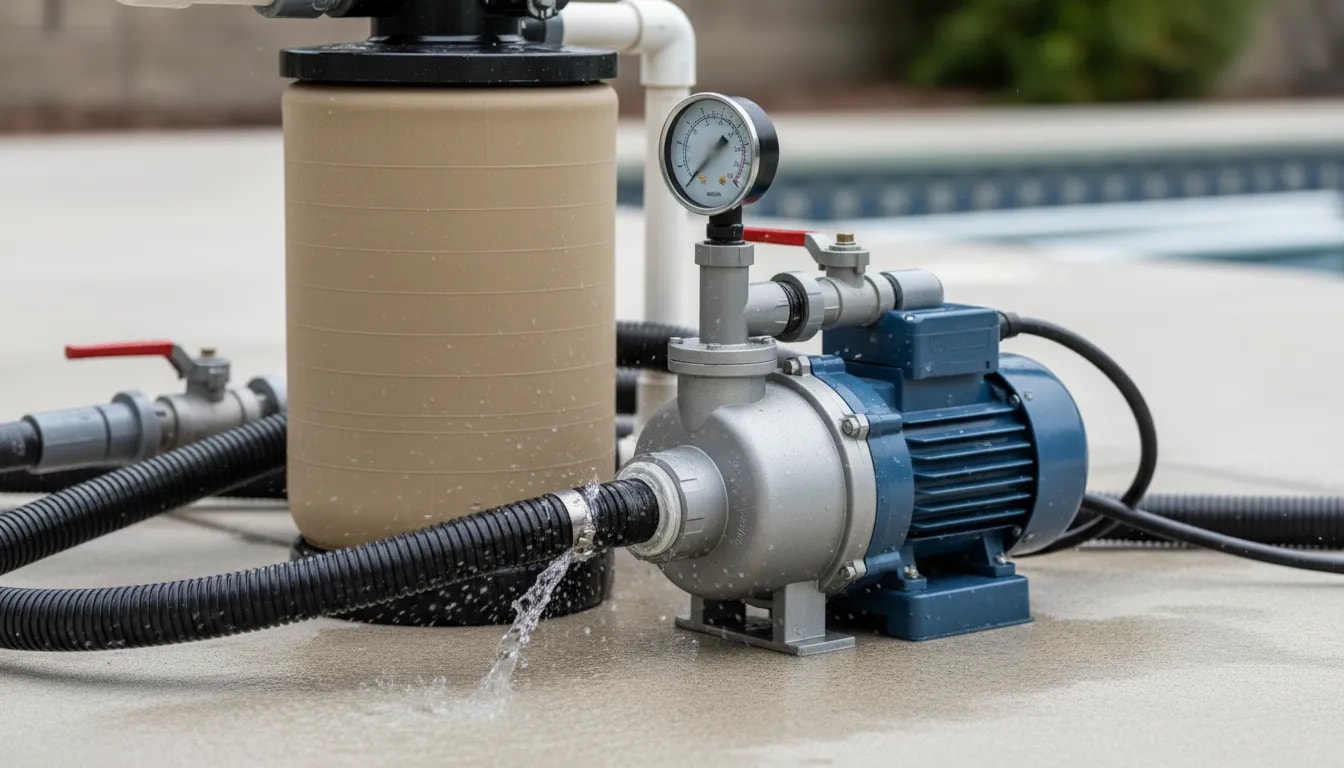
High pressure in an in-ground pool system is more than an annoyance. When filter pressure runs too high for too long, it can strain the pump and filtration equipment, reduce water flow, and turn routine maintenance into emergency repairs. For homeowners with a concrete pool (gunite pools), understanding what “high pressure” means and how to correct it helps protect both performance and longevity.
This guide explains common causes of elevated filter gauge PSI and walks through practical fixes. It is written for typical cartridge filter setups and closely related pool plumbing configurations.
What “High Pressure” Means on the Pool Filter Gauge
Pool system pressure is generally measured at the pool filter pressure gauge. Many systems run around 10 PSI or slightly higher. A reading above 20 PSI is typically considered high, and continuing to operate at elevated levels can put added stress on the pump and filter.
Practical takeaway: If the gauge is consistently above 20 PSI, it is a sign that something is restricting flow, pulling air, or causing the equipment to work harder than it should.
Start With a Quick Pressure-and-Flow Check
Before changing parts, confirm the problem behavior:
- Verify the gauge reading at steady operation.
- Observe filter flow: higher pressure paired with reduced water flow through the system often indicates restriction.
- Check whether pressure rises over time. A gradual increase over hours can point to an air leak or air being trapped in the top of the filter tank.
This matters because each cause has a different pattern and requires a different fix.
Common Causes of High Pressure and How to Fix Them
1) Clogged or Dirty Filter (Most Common)
A clogged or dirty filter is a frequent driver of high pressure. Over time, fine debris, oils, and chemicals can embed into filter material. Simple rinsing may not remove this embedded material.
What to do:
- Clean the cartridge filter using proper cartridge filter cleaning procedures.
- If embedded material remains, use a cartridge cleaning product designed to break up and remove material that simple spraying does not.
- After cleaning, check the gauge. The system pressure should drop back down to normal operating range.
2) Suction Air Leak
An air leak on the suction side can cause unusual pressure behavior. With a large suction leak, the pump may lose prime before significant pressure builds. With a small leak, air can be drawn into the system and accumulate at the top of the filter tank. Over a few hours, pressure can rise while water flow through the filter becomes less effective.
What to do:
- Locate and repair suction leaks in the system.
- Re-test filter pressure after repairs to confirm the system returns to normal.
- If the issue progresses gradually, treat it as more than a one-time measurement and prioritize finding an air leak.
3) Clogged Breather Tube (Air Purge Path)
Many filter tanks include a breather tube that automatically purges trapped air at the top of the filter. If this tube becomes clogged with dirt or debris, pressure inside the filter tank can rise above normal.
What to do:
- Clear any debris or dirt from the breather tube.
- Restore airflow for trapped air to escape from the top of the filter.
- Then check whether the gauge pressure drops back to normal.
4) Oversized Pump (Too Much Flow for the System)
If the pump is pushing more water than the pipes and filter can handle, pressure can increase. This can happen when a pump is replaced without proper sizing for the total system.
What to do:
- Confirm whether the pump matches the pool system requirements.
- If the pump is oversized, the solution is to reduce water flow by either:
- Replacing with a smaller motor, or
- Changing to a smaller motor configuration that reduces flow.
- After changes, re-check filter gauge pressure.
Why this happens: Motor horsepower ratings and service factors can affect total horsepower delivered, which influences how much water the pump attempts to move through the system.
5) Closed Diverter Valves on Return Lines
Diverter valves placed in return lines after the filter can restrict total return flow if they are accidentally closed. Restricted flow can show up as higher pressure readings.
What to do:
- Inspect diverter valves connected in return lines.
- Make sure valves are set to the open position needed for normal circulation.
- Re-check gauge pressure after adjusting valves.
6) Undersized Return Jets (Restricted Exit Points)
Small exit holes in return jets can contribute to higher system pressure because they restrict where water exits the return plumbing.
What to do:
- Inspect return jets and compare exit hole sizes.
- Replace with jets that have larger exit openings if the current jets are undersized for the system.
- Monitor the filter gauge after replacement to confirm pressure normalizes.
A Simple Troubleshooting Order That Prevents Rework
When pressure is high, it helps to follow an order that targets the most likely restrictions and flow problems first:
- Clean the cartridge filter thoroughly, including embedded debris removal if needed.
- Check suction air leaks if pressure rises over hours or flow weakens.
- Inspect the breather tube for clogs that prevent air from escaping.
- Verify equipment sizing and consider pump oversizing if repairs do not fix the issue.
- Confirm return-side valves are open (diverter valves).
- Review return jets for undersized exit holes.
Common Mistakes to Avoid
- Only rinsing the filter when embedded debris is present. Embedded material can require a cartridge cleaning product to fully restore flow.
- Ignoring gradual pressure rise. A slow increase is a clue that air may be accumulating rather than a purely dirty-filter restriction.
- Overlooking breather tube clogs. A small blockage can prevent trapped air from venting properly.
- Assuming the problem is “normal”. Operating consistently above 20 PSI can strain the pump and filter.
- Changing multiple variables at once. Adjust one potential cause, then confirm gauge pressure returns to normal before moving on.
When to Bring in Professional Help
Some causes are straightforward to address (like filter cleaning or clearing a clogged breather tube). Others may require deeper inspection of suction integrity, return-side plumbing configuration, or pump sizing. If repairs do not bring pressure back to normal or if diagnosis is unclear, working with an experienced team helps protect the equipment and reduces time spent troubleshooting.
For homeowners planning a new build or major equipment modernization for a concrete pool, partnering with a contractor that coordinates the full system design is especially valuable. One option to explore is custom pool design and gunite pool construction through Werth Builders.
FAQ
What PSI reading is considered high on a pool filter gauge?
Can a dirty cartridge filter cause high pressure even after rinsing?
How does a suction air leak affect filter pressure?
Why does a clogged breather tube increase pressure?
What should be checked if the pool pressure stays high after filter cleaning?
Next Steps
Reducing high pool pressure usually comes down to restoring correct flow through the filter and return plumbing. Start with the most common restriction (cartridge filter buildup), then look for flow disruption (air leaks, clogged breather tube, closed diverter valves, undersized return jets). If the pressure does not return to normal, pump sizing is a likely factor.
For homeowners who want a long-term solution that considers the entire water circulation system from the start, concrete pool and equipment planning should be part of the overall design approach. Exploring more about pool construction and related outdoor living upgrades can also help align equipment performance with the backyard experience. For example, homeowners who are expanding their outdoor setup may also want to evaluate outdoor kitchen design as part of a cohesive renovation plan.
Ready to Transform Your Backyard?
Get a free consultation and estimate for your custom pool, spa, or outdoor living project. Serving Huntington Beach & Orange County.