
Weekly Pool Maintenance Checklist: Keep an Inground Concrete Pool Clean and Balanced in 15 to 20 Minutes
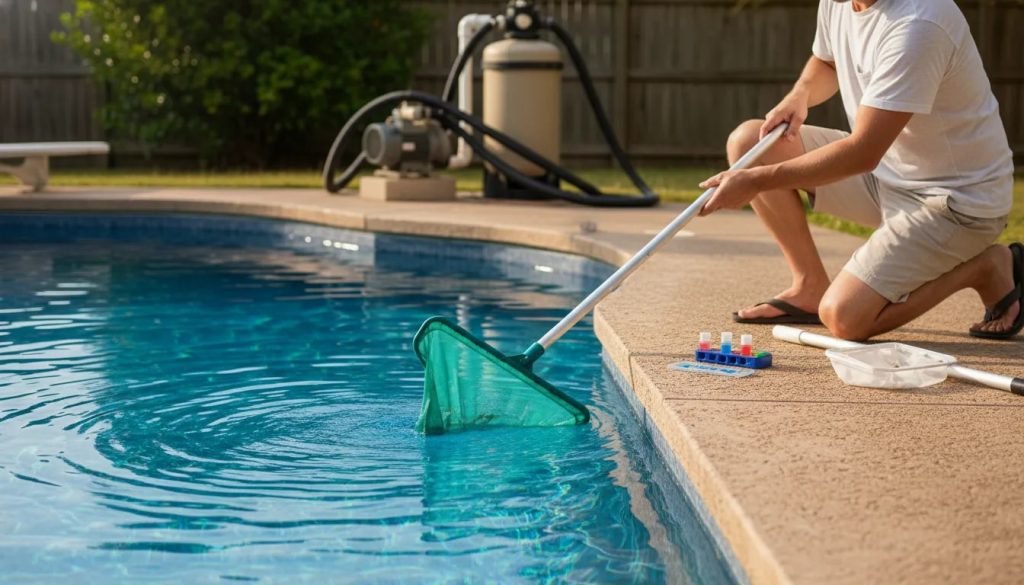
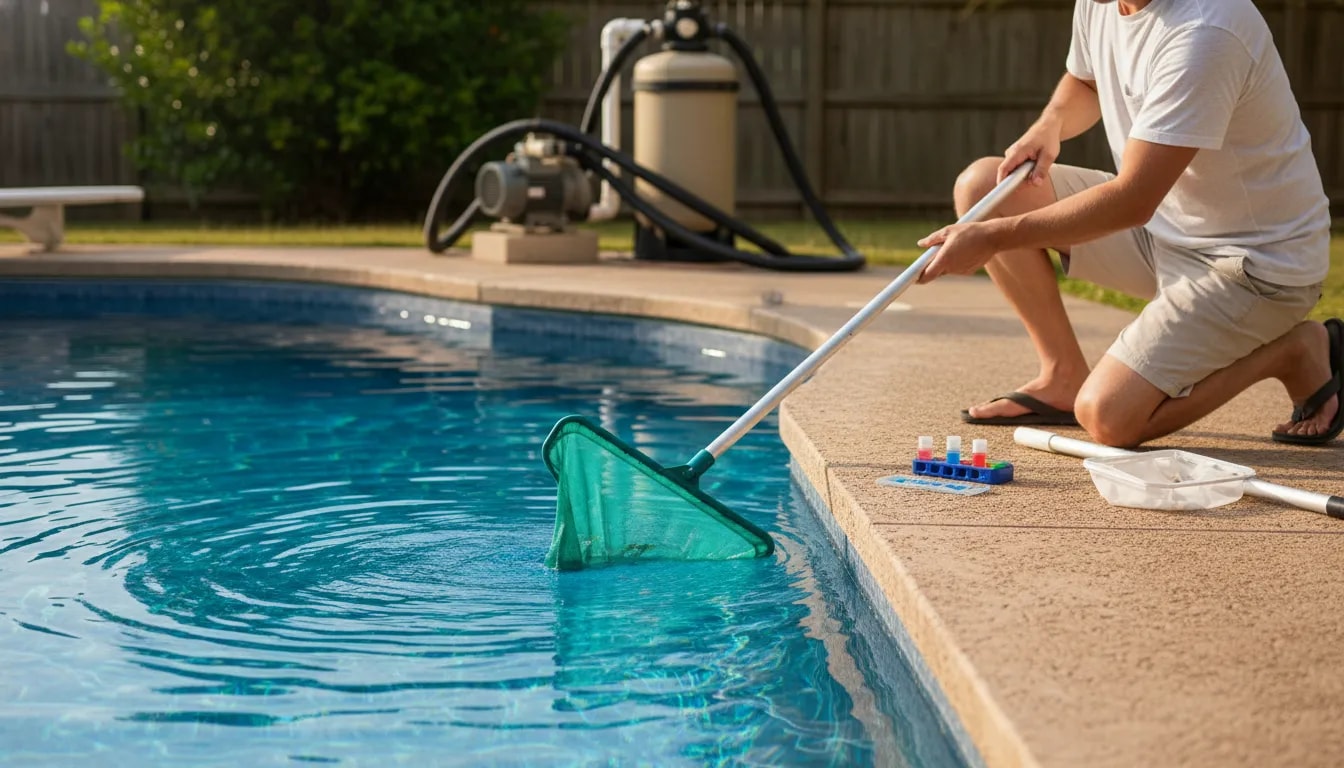
A well-maintained inground pool is the difference between a backyard that feels effortless and one that quickly turns into troubleshooting. Weekly maintenance helps keep debris under control, prevents filter and circulation issues, and keeps chemical balance stable. It also makes equipment last longer by reducing unnecessary strain on the pump and filter.
This checklist is designed for homeowners with an inground concrete pool (gunite) and typical skimmer and filtration setups. The routine focuses on the tasks that can be done quickly and safely, plus a few checks that catch small problems early.
Why weekly maintenance matters for a concrete pool
Concrete pool surfaces and equipment are built for years of use, but they do not perform well when flow is restricted or chemical levels drift. A weekly routine supports:
- Consistent circulation by keeping the skimmer pathway clear.
- Cleaner water by removing debris before it settles and stains.
- Lower equipment stress by avoiding clogged baskets and overdue filter cleaning.
- More stable water chemistry by testing before small issues become larger ones.
Plan to spend 15 to 20 minutes
A realistic weekly schedule usually fits into a short session because the steps are repeatable. Many homeowners can keep momentum by sticking to the same order each week, but the exact order is flexible as long as debris removal and chemical testing are included.
Step-by-step weekly pool maintenance checklist
1) Vacuum or clean debris from the pool bottom first
Start by using a pool cleaner to remove debris from the pool floor. This matters for two reasons. First, it improves cleanliness immediately. Second, if chemicals are going to be added later, it is best not to shock the pool while a cleaner is left in place because it can speed up wear on the cleaner’s parts.
2) Confirm the water level is correct
Next, check the water level against the skimmer. A common target is having the water level about halfway up the skimmer opening. Adjust by:
- Too high: drain a little water.
- Too low: add water to restore skimmer function.
3) Clean the skimmer basket and verify the weir door
Remove the skimmer lid and inspect the basket. Empty it when it has collected debris. A full basket can impede water flow into the pump.
While the lid is off, check the skimmer’s weir door. It should move up and down properly. If it is stuck, it can prevent water from flowing in as intended. (Some systems use a floating weir door, but the goal is the same: smooth movement.)
4) Do a quick equipment inspection while the pump is running
With the pump on, visually scan the equipment area. Look for drips, puddles underneath the pump, or water flowing where it should not be. This is also the moment to check filter pressure.
5) Use filter pressure as a simple maintenance trigger
Filter pressure is a helpful indicator of when cleaning is needed. A practical rule is to watch how much the reading changes over time. For example, if after cleaning the filter the gauge reads 10 psi, then rising by about 10 psi (to around 20 psi) is a common sign the filter is getting clogged and should be cleaned again.
Cartridge filters can be cleaned as part of this weekly routine when pressure indicates it is needed. Sand and de filters require different procedures, so it is best to follow the correct method for the specific filter type.
6) Check pump priming by looking at the pump lid water level
While the pump is running or during inspection, confirm water is present up to the top of the pump lid area. If water is not up to the lid, the pump may not be fully primed, which can lead to performance problems.
Clean the pump basket and cartridge filter when needed
Weekly cleaning often includes emptying the pump basket and checking the filter. If the filter needs cleaning (commonly driven by rising pressure), turn off the pump first, relieve pressure, then open the pump and filter lids.
Pump basket
Open the pump lid after the pump is turned off and pressure is bled off. Empty the basket and reinstall everything properly.
Cartridge filter inspection and cleaning
When the cartridge is removed, inspect it closely. Cleaning is also a good time to evaluate condition. Replace the cartridge if:
- The cartridge bands are broken.
- It feels soft when pressed.
If a replacement is needed and the exact cartridge is unclear, use the part number printed on the cartridge or check with a pool parts provider that can match by cartridge specs.
Reassemble correctly and help the pump prime
After the pump and filter are put back together, confirm that the air relief is left open as needed for air bleeding. A practical priming tip is to fill the pump strainer with water using a bucket or garden hose before starting the pump. Once water starts coming out of the air relief, close it so normal operation can begin.
Test chemical levels after the circulation steps
Once cleaning and equipment checks are done, test the water using a reliable test kit. Basic parameters to track include:
- Free chlorine
- pH
- Total alkalinity
- Calcium hardness
- Stabilizer (often called CYA)
Testing helps prevent overcorrection. For example, if free chlorine is in the target range (commonly around 2 to 4 parts per million), there may be no need for additional chlorine that day. If pH is slightly high, the water may require acid addition in measured amounts.
A safe weekly adjustment approach
Only adjust chemicals after testing, and avoid mixing chemicals together. Add chemicals one at a time, and pour them around the perimeter of the pool rather than dumping in a single spot.
Brush and skim to prevent buildup
After chemical adjustments, brush pool surfaces so treatment reaches where it matters most. Focus on:
- Walls and steps
- The bottom
If leaves or floating debris are present, skim the surface with a skimmer net to keep them from sinking and accumulating.
Important cleaner care before shocking or heavy chemical use
Before shocking or adding large chemical doses, remove any pool cleaner from the water if possible. This helps prolong cleaner life by reducing exposure to harsher conditions.
Robotic vs. pressure cleaners: incorporate cleaner removal and quick rinsing
Different cleaner types require slightly different routines. For robotic cleaners, a simple weekly habit can include removing it and rinsing it with fresh water. For other cleaner setups that connect to dedicated lines or use pressure, removal is still a useful step when shocking or adding significant chemicals.
Common weekly pool maintenance mistakes to avoid
- Skipping water level checks: incorrect level can reduce skimmer performance.
- Letting baskets fill up: restricted flow can stress the system and reduce cleaning effectiveness.
- Ignoring filter pressure: waiting until flow feels “off” often means the filter is already working inefficiently.
- Adding chemicals without testing first: results in unnecessary dosing and imbalance.
- Mixing chemicals: chemicals should be added one at a time.
- Leaving cleaners in place during shocks: this can speed up wear on cleaner parts.
- Forgetting to verify pump priming: improper priming can prevent normal circulation.
Quick weekly checklist (printable style)
- Vacuum/clean the pool bottom with the pool cleaner.
- Check water level to be around halfway up the skimmer opening.
- Empty the skimmer basket and verify the weir door moves freely.
- Visually inspect equipment for drips, puddles, or unusual flow.
- Check filter pressure and clean the filter if pressure has risen significantly.
- Empty the pump basket.
- Test water chemistry: free chlorine, pH, and key supporting levels.
- Adjust chemicals carefully, adding acids or other chemicals one at a time.
- Brush walls, steps, and bottom.
- Skim leaves and surface debris when needed.
When to go beyond weekly maintenance
Weekly upkeep helps most problems never get serious. However, deeper maintenance or repair may be needed if there are persistent leaks, recurring priming issues, major filter pressure swings, or repeated chemical drift. Working with a knowledgeable local contractor is often the fastest way to identify root causes, especially for circulation or filtration problems.
For concrete pool owners planning upgrades or a full backyard refresh, working with an experienced team helps ensure new equipment and water features integrate properly with the existing system. For concrete pool construction and ongoing improvements, see custom pool design.
FAQ
How often should a concrete pool be vacuumed?
Vacuuming is typically part of weekly maintenance. Consistent weekly vacuuming helps prevent debris from settling on the pool floor and improves water clarity. If conditions are worse (heavy storms or lots of leaves), vacuuming may need to be more frequent.
What water level should an inground pool have?
A common target is having the water level about halfway up the skimmer opening. If it is too high, draining a bit helps. If it is too low, adding water restores skimmer performance.
How do homeowners know when to clean a cartridge filter?
Filter pressure readings are a practical trigger. If the gauge rises significantly after a cleaning (for example, about 10 psi), it often indicates the filter is becoming clogged and needs cleaning.
Should a pool cleaner stay in the water when adding chemicals?
It is best to remove the cleaner when shocking or adding large chemical doses. This helps prolong cleaner life because harsher chemicals and shock conditions can accelerate wear on cleaner parts.
Which chemicals should be tested weekly?
A solid weekly focus includes free chlorine and pH, plus supporting levels like alkalinity, calcium hardness, and stabilizer (CYA) depending on what the pool needs and the available test kit.
Is the order of weekly tasks important?
The order can vary as long as the routine covers debris removal, water level and flow checks, equipment inspection, filter maintenance when needed, and chemical testing and adjustment. Many homeowners prefer to clean first, then test and adjust.
Next steps for homeowners
For concrete pool owners in Southern California, a consistent weekly routine is the easiest path to clean water and reliable equipment performance. When upgrades are part of the plan, homeowners often find it helps to consider how the pool’s filtration and circulation integrate with any new features.
Outdoor living projects can also raise the “total backyard experience.” If planning entertainment areas, pairing pool care with lifestyle upgrades can make the entire space feel more complete. Learn more about outdoor kitchen construction when building a full backyard setup.
Ready to Transform Your Backyard?
Get a free consultation and estimate for your custom pool, spa, or outdoor living project. Serving Huntington Beach & Orange County.