
How to Clean Algae Off Pool Tile Grout (Fast, Inexpensive Method)
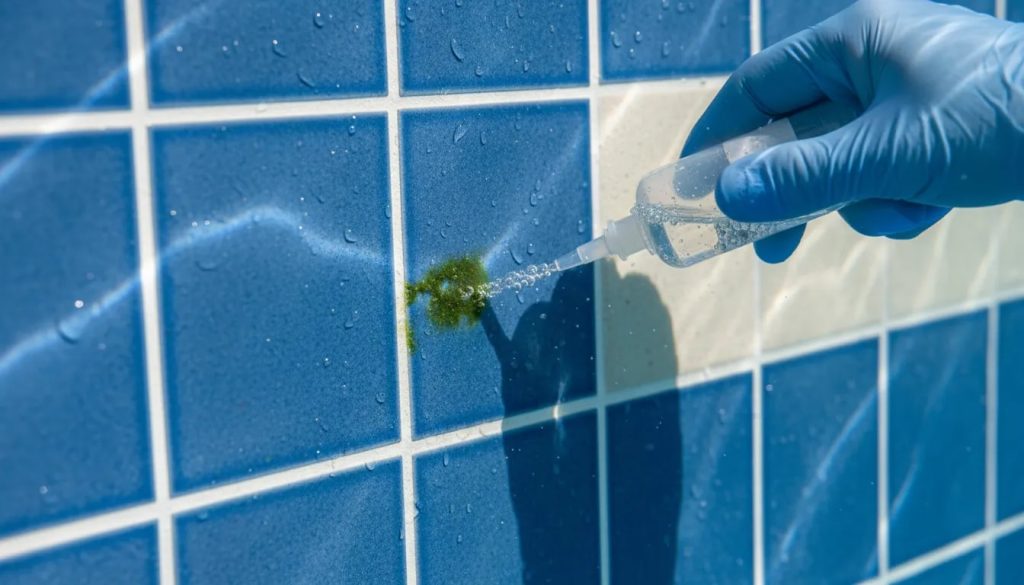
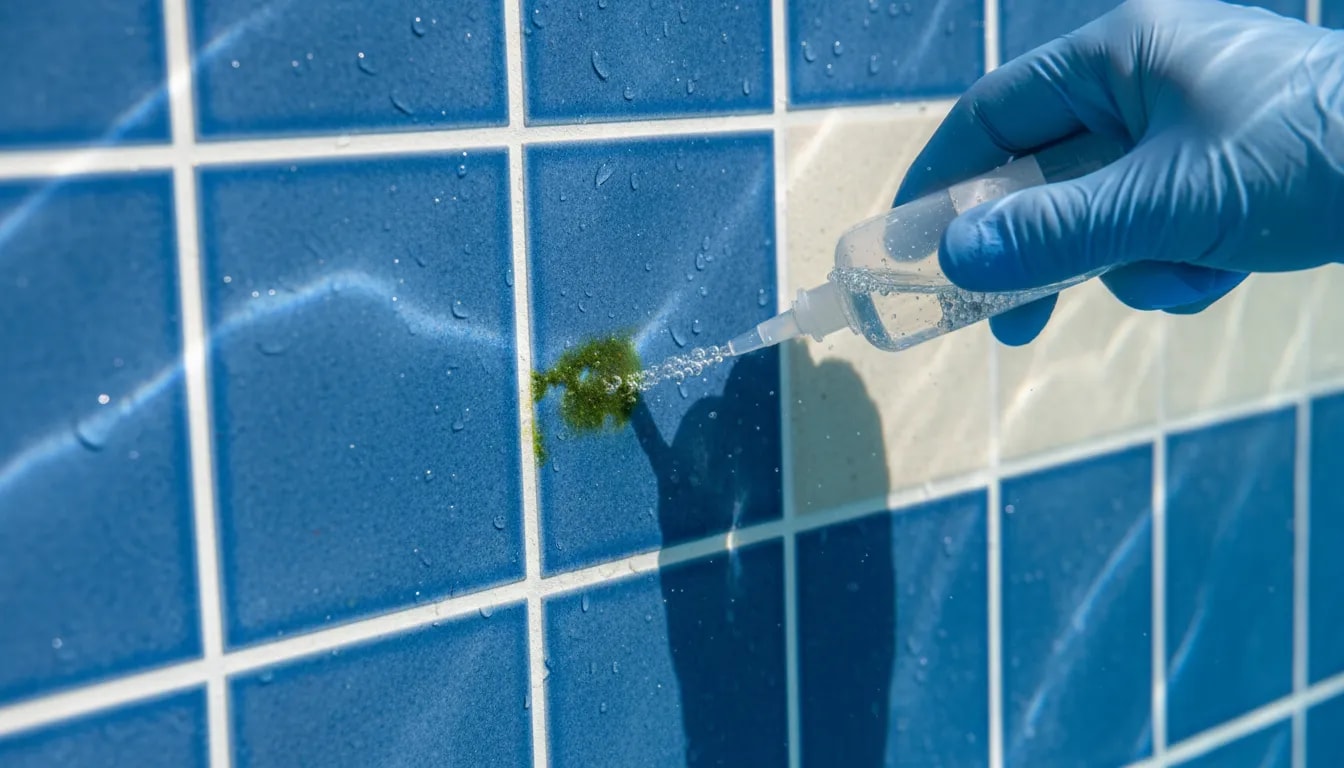
Pool algae is more than a surface problem. When it gets into pool tile grout, it can cling stubbornly in the lines where tile meets grout and reappear as the season progresses. For Southern California homeowners maintaining an in-ground concrete or gunite pool, restoring clean grout is often a matter of using the right approach, protecting skin, and letting the treatment dwell long enough to work.
This guide explains an inexpensive method that uses chlorine tablets directly on affected grout lines. It is designed to help remove algae from tile grout without immediately escalating to costly resurfacing or full tile replacement.
Why algae builds up in pool tile grout
Algae tends to thrive anywhere water, light, and nutrients combine. Pool tile grout provides textured crevices that hold moisture and offer ideal spots for algae to take hold. Once algae penetrates the grout lines, it can be harder to remove than algae on a smooth pool surface.
That is why targeting the grout lines directly matters. If the treatment only addresses the waterline or tile face, algae may remain lodged in grout and return.
Supplies needed for chlorine-tablet grout cleaning
The method described below uses a chlorine tablet as the active ingredient and a pool brush to scrub after an application window.
- Latex gloves to protect skin from irritation caused by direct chlorine contact
- Chlorine tablet (the approach uses broken tablet edges for scrubbing/grout application)
- Pool brush suitable for working tile and grout lines
- Clean water for rinsing after scrubbing
Step-by-step: Clean algae from pool tile grout with chlorine tablets
This approach focuses on removing algae from grout lines by applying chlorine directly where algae is located, then scrubbing once the chlorine has had time to dwell.
- Put on latex gloves. Chlorine can irritate skin, so gloves help reduce direct contact while working close to grout.
- Break a 3-inch chlorine tablet into smaller pieces. Using sharper edges can help scrub grout lines where algae is present.
- Scrub the grout lines using the broken tablet edges. Focus on the grout where algae is visible or likely located. Apply firm, controlled pressure to work into the lines.
- Let the chlorine sit for 24 hours. Do not immediately rinse. Allow enough time for the chlorine to work within the grout.
- Scrub again with a pool brush, then rinse. After the dwell time, use a pool brush to lift remaining algae from the grout lines. Rinse thoroughly afterward.
- Repeat as needed. Stubborn spots may require multiple rounds until algae is removed.
Tips for better results on stubborn grout algae
- Target the grout lines, not just the tile surface. Algae lodged inside grout usually needs direct treatment where it has taken hold.
- Give dwell time the same respect as the scrubbing. The waiting period is a key part of the method. Shortening it can reduce cleaning effectiveness.
- Use a pool brush designed for tile and grout. A brush meant for pool surfaces helps avoid damaging grout while still providing enough agitation.
- Repeat instead of forcing. For heavy buildup, multiple treatments are often safer than aggressive scrubbing in one session.
Common mistakes to avoid
- Skipping gloves. Direct chlorine contact can irritate skin. Gloves reduce exposure while working close to grout.
- Applying chlorine and rinsing immediately. This method depends on a chlorine dwell period, including a 24-hour sit time.
- Treating only the waterline. If algae has moved into grout, cleaning must focus on the grout lines where it is embedded.
- Expecting instant results every time. Some algae stains can require more than one cycle.
Is this method safe for concrete or gunite pools?
This method is aimed at homeowners with in-ground concrete or gunite pools dealing with algae in tile grout. The instructions emphasize protection (latex gloves), direct grout application, controlled scrubbing with a pool brush, and rinsing after a full dwell period.
As with any chemical-based cleaning, care should be taken to follow product directions for chlorine tablets and to avoid unnecessary handling. If algae persists after several rounds, it may indicate a deeper issue requiring additional troubleshooting beyond grout treatment.
When algae keeps coming back
If algae returns quickly after grout cleaning, homeowners often need to look at broader pool maintenance factors. While the grout-cleaning steps address visible growth in the lines, recurring algae suggests conditions that still support growth.
At minimum, algae that keeps reappearing often means it is not fully resolved in the grout, or the pool environment is still conducive to algae growth. Repeating the grout method until removal is complete can be part of a longer-term plan.
Maintenance mindset for Southern California pool owners
Backyards across Orange County and nearby Southern California communities rely on year-round pool use, intense seasonal sun, and frequent weather changes. Keeping algae from taking hold in grout often comes down to consistent attention to cleaning and water management.
When a backyard upgrade is part of improving the overall pool experience, homeowners sometimes pair algae prevention with broader pool and landscape planning. For families considering long-term improvements to a concrete pool, it helps to work with a contractor who builds with durability and maintenance in mind. For example, custom concrete pool construction can support a pool setup that stands up well to the realities of Southern California pool ownership.
If an outdoor kitchen or spa addition is part of the same backyard refresh, coordinating surface materials and maintenance needs can also help. Learn more at outdoor kitchens in Southern California.
For a general overview of the importance of choosing the right builder for long-term performance, see Werth Builders.
FAQ
How long should chlorine sit on pool tile grout?
What tool works best for scrubbing tile grout lines?
Is repetition necessary for stubborn algae stains?
Why are gloves recommended when using chlorine tablets?
Does this method focus on tile surfaces or grout lines?
Next steps: Restore clean grout, then prevent re-growth
Start by removing algae directly from the grout lines using chlorine tablet edges, then allow chlorine to dwell for 24 hours, scrub with a pool brush, and rinse. If algae persists, repeat until grout is clean.
Once the grout looks clear again, maintaining consistent pool care can help reduce the chance of algae returning during the next warm season.
Ready to Transform Your Backyard?
Get a free consultation and estimate for your custom pool, spa, or outdoor living project. Serving Huntington Beach & Orange County.